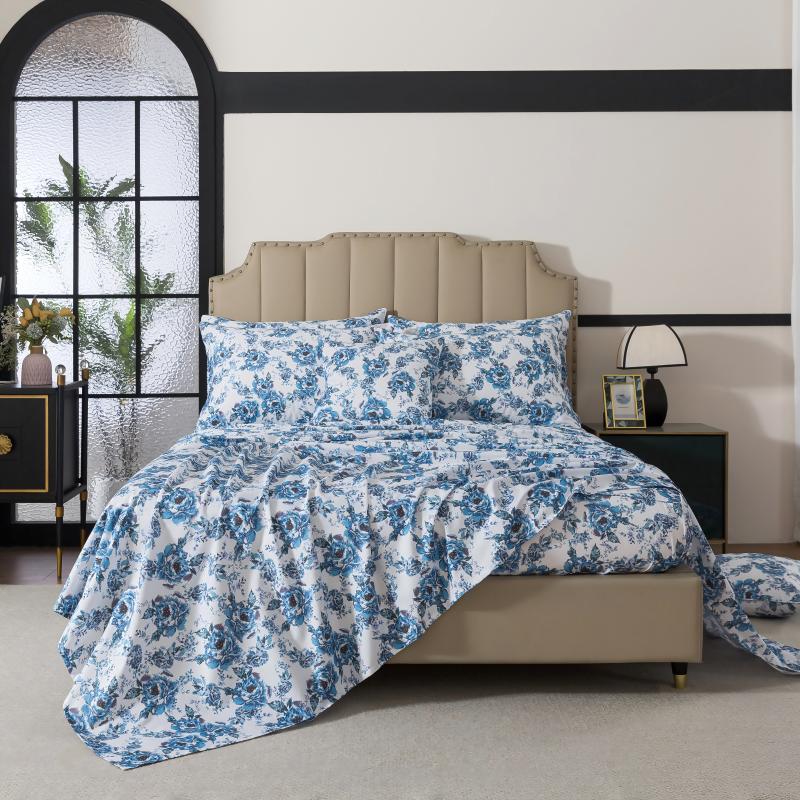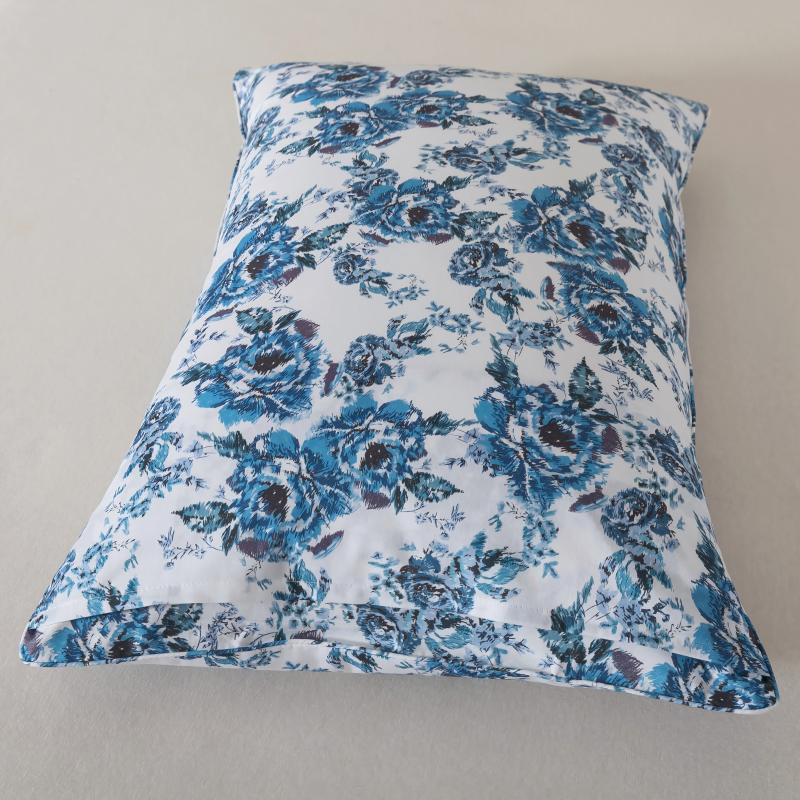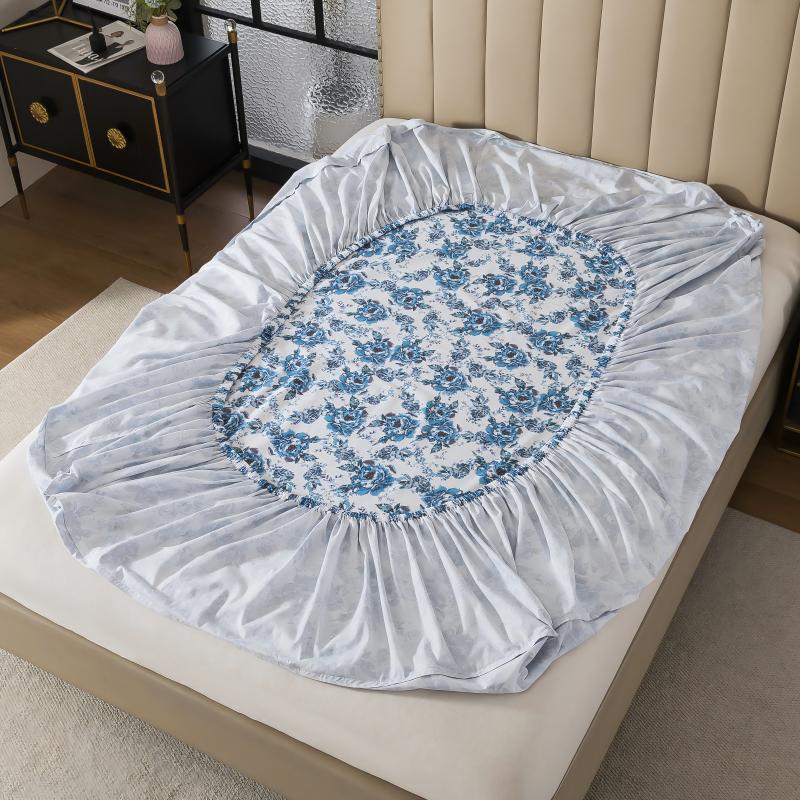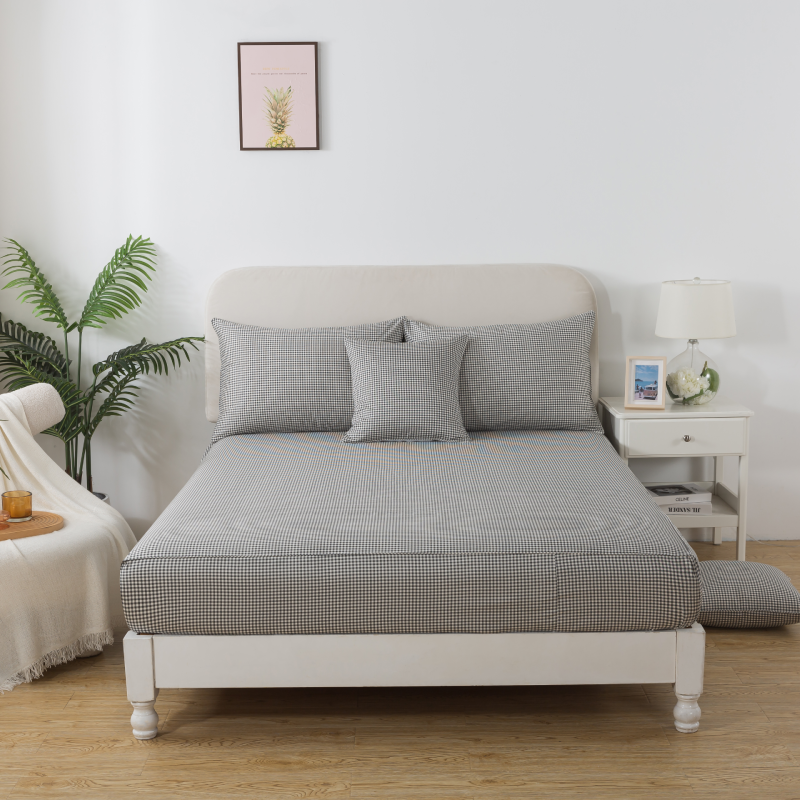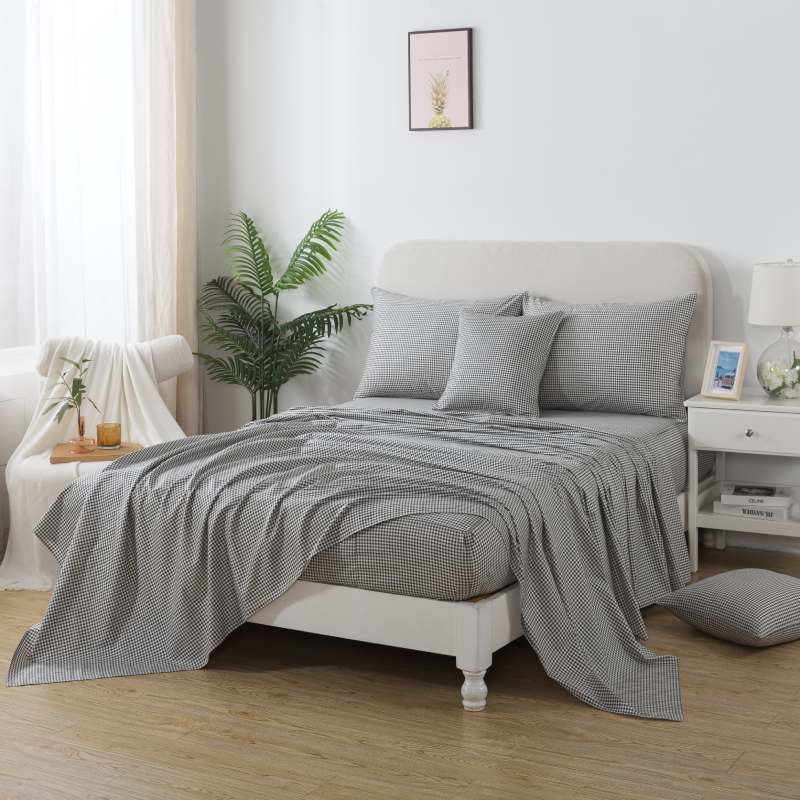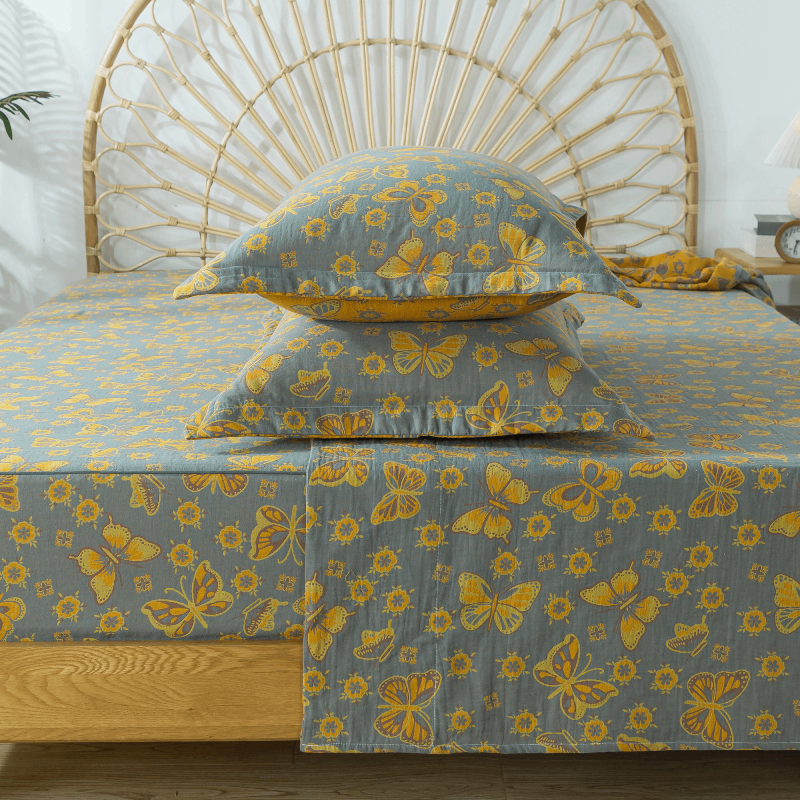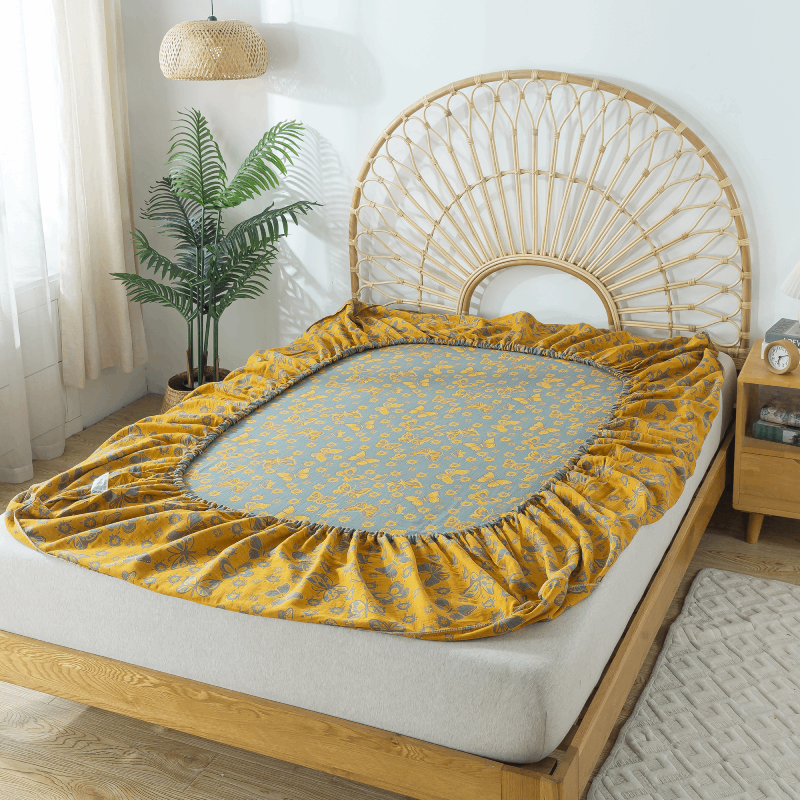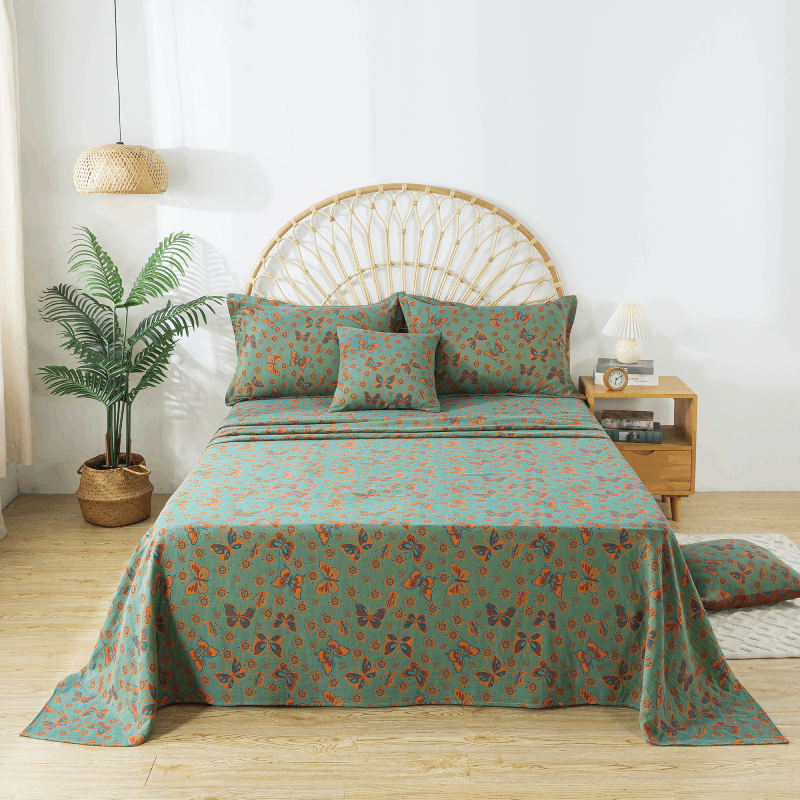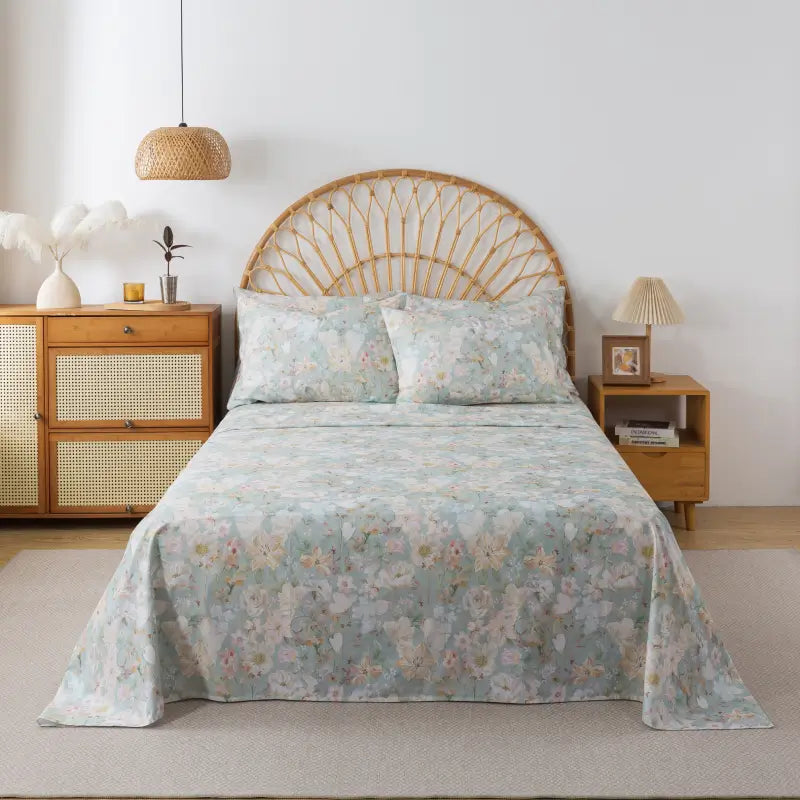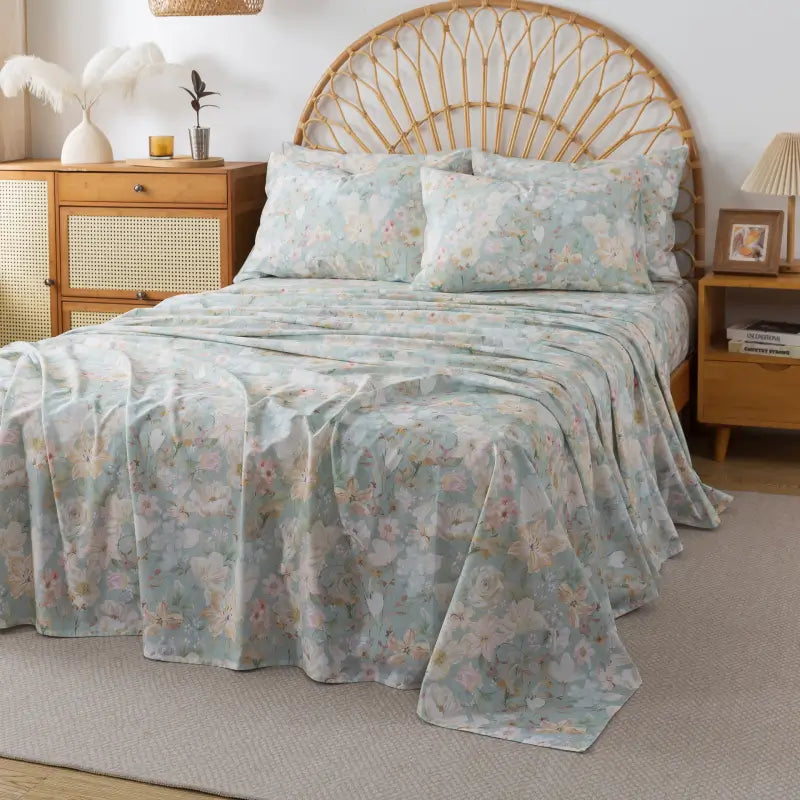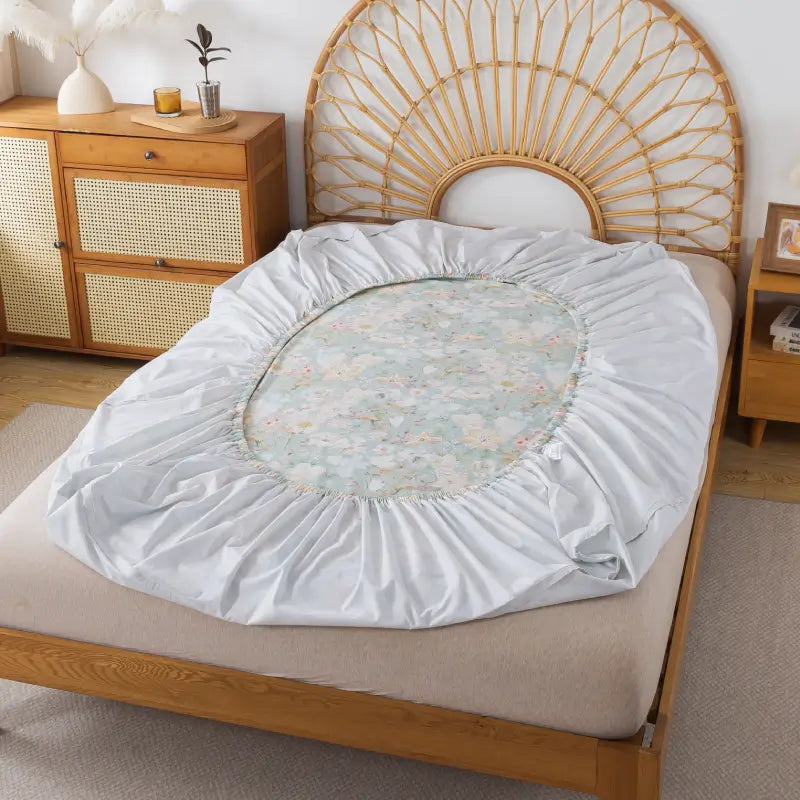


Floral bedding can feel surprisingly different from one hour to the next. In the morning, a botanical print may appear fresh and airy. By afternoon, the same pattern can look brighter and more detailed. At night, it may become softer, warmer, and more intimate.
The bedding itself has not changed. What changes is the light, the surrounding colors, and the way our eyes respond to the room. Understanding these shifts can help you choose floral bedding that looks beautiful throughout the entire day.
Morning Light Makes Florals Feel Fresh
Morning sunlight is often cool, gentle, and slightly blue in tone. When it enters a bedroom, it can make floral prints appear cleaner and more delicate.
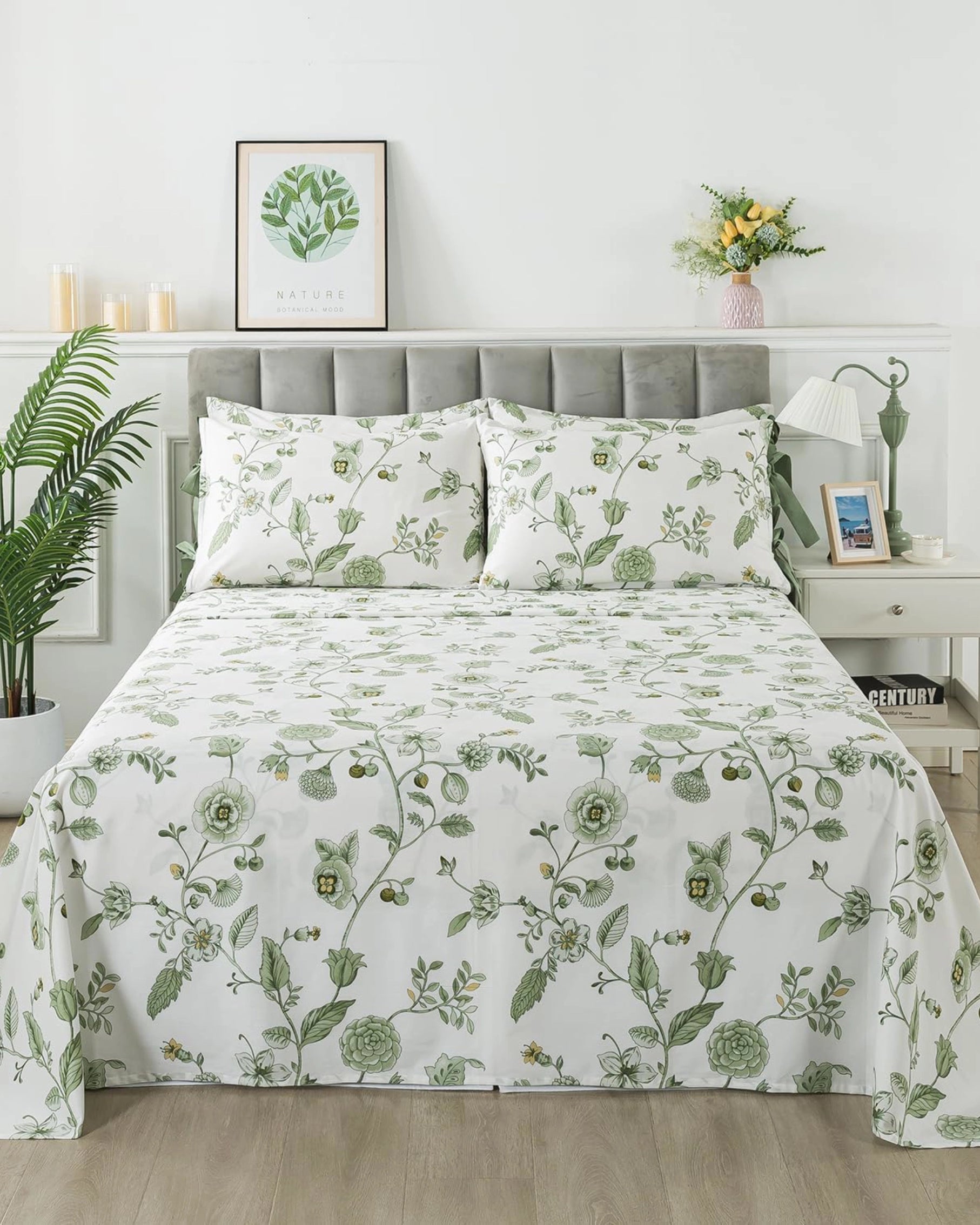
Light-colored backgrounds, soft green leaves, pale blue flowers, and small botanical details often look especially crisp in the morning. Cotton bedding also reflects natural light softly, helping the bed feel comfortable rather than overly bright.
This is one reason floral bedding works so well in bedrooms with east-facing windows. The early light highlights the pattern without overwhelming the space, creating a calm and refreshing atmosphere for the beginning of the day.
Midday Light Reveals More Detail
As the sun rises, daylight becomes stronger and more neutral. At midday, floral patterns often appear at their clearest.
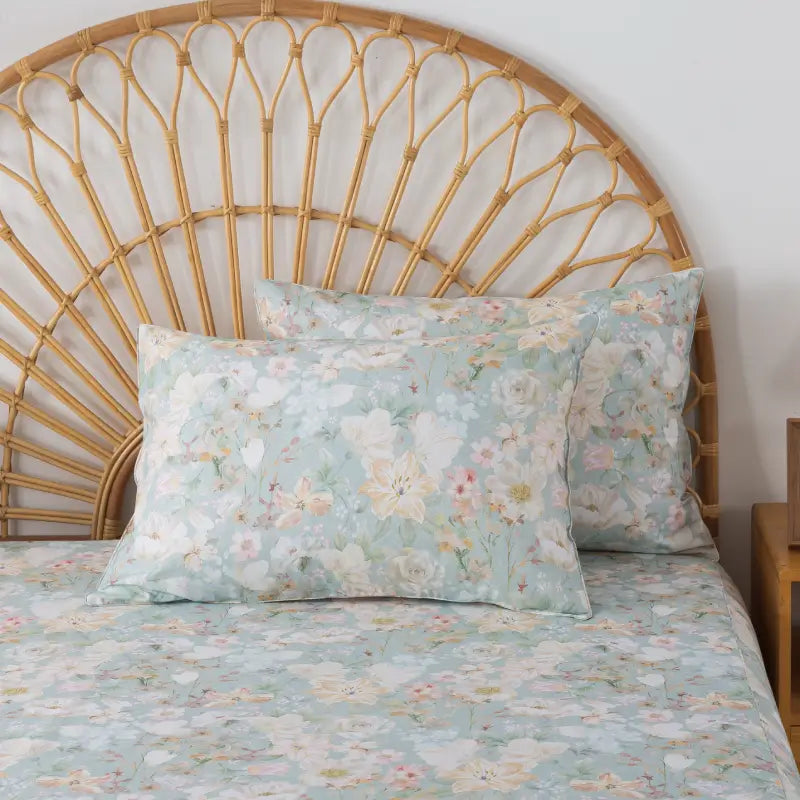
Fine outlines, layered petals, subtle stitching, and small color variations become easier to see. A print that seemed understated in the morning may look more vivid and decorative under brighter light.
This is particularly noticeable with detailed patterns such as toile florals, watercolor botanicals, vintage roses, or densely arranged garden prints. Strong natural light allows the design to show its full character.
However, direct sunlight can also increase contrast. Dark leaves may look deeper, while white backgrounds may appear brighter. If the bedroom receives intense midday sun, sheer curtains can help soften the light and prevent the pattern from feeling too sharp.

Afternoon Sun Brings Out Warm Colors
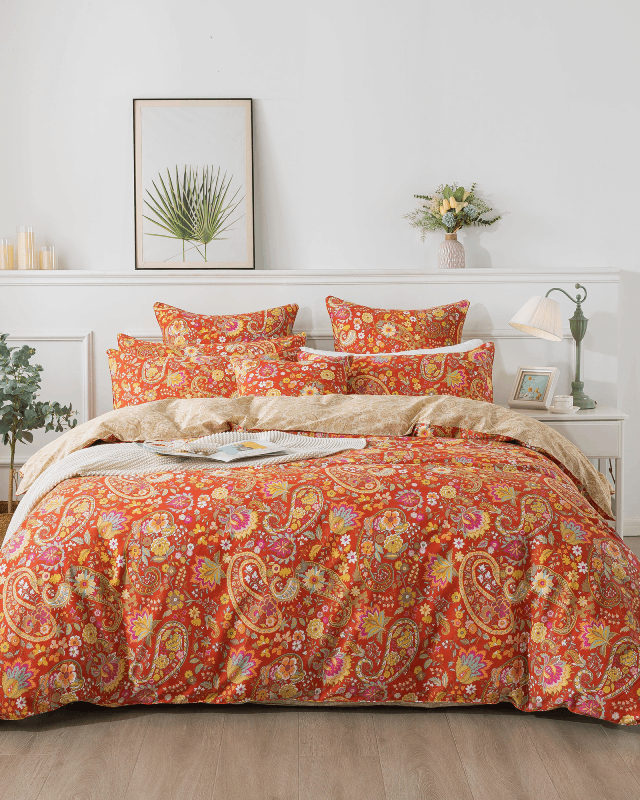
Afternoon light usually becomes warmer, especially in rooms with west-facing windows. Golden sunlight can enhance shades such as cream, beige, peach, dusty pink, rust, and warm green.
A floral bedding set with vintage or cottage-inspired colors may look especially inviting at this time of day. Warm light gives the pattern a relaxed, lived-in quality that suits farmhouse, French country, and romantic interiors.
Even cooler colors can change under afternoon light. Blue florals may appear softer, while gray backgrounds can take on a warmer, slightly beige tone.
This natural transformation adds depth to the bedroom. Instead of looking exactly the same all day, the bedding responds to the changing environment.
Evening Light Softens the Pattern
Once natural light fades, lamps and ceiling lights become the main light sources. Most bedroom lighting is warmer than daylight, so floral bedding often appears softer and more muted in the evening.
Strong contrasts may become less noticeable, while warm colors become richer. Small details can blend together, making the overall pattern feel calmer.
This can be especially appealing in a sleeping space. A floral design that looks lively during the day may feel cozy and restful at night.
The type of light bulb also matters. Warm white bulbs create a comfortable, golden atmosphere, while cool white bulbs make colors look sharper and slightly bluer. For a relaxing bedroom, warm lighting usually complements floral bedding more naturally.
Fabric Texture Changes How Light Behaves
Color is not the only factor. Fabric texture also affects the appearance of floral bedding.
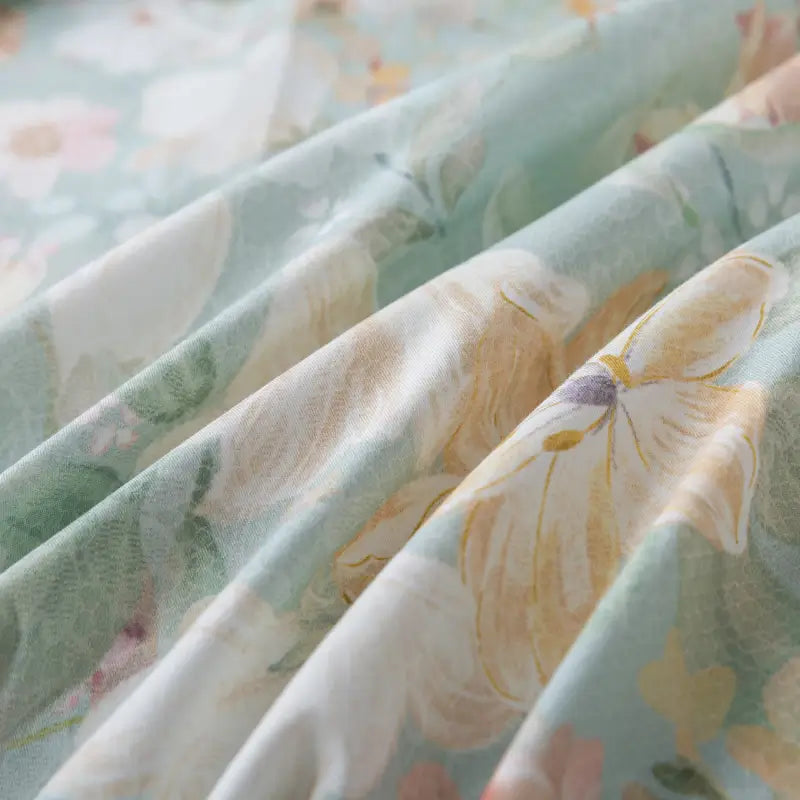
Smooth cotton percale reflects light differently from brushed, quilted, or double-gauze cotton. Percale can make printed details look crisp and defined, while textured fabrics scatter the light and create a softer visual effect.
Quilted floral bedding may also develop subtle shadows along its stitched lines. These shadows shift as the light moves, giving the bed more dimension throughout the day.
Ruffles, pleats, and layered edges create similar changes. In bright light, their structure becomes more visible. In evening light, they produce gentle shadows that make the room feel warmer and more relaxed.
Wall Colors and Furniture Affect the Print
Floral bedding never appears in isolation. Nearby walls, curtains, rugs, and furniture influence how its colors are perceived.
A floral print placed in a bright white room may look crisp and colorful. The same print in a room with beige walls may appear warmer and more muted. Dark wood furniture can make pale florals stand out, while light wood creates a softer, more natural look.
This is why product photos and real bedrooms do not always look identical. Lighting conditions and surrounding colors can change how the bedding is experienced.
Before selecting a floral pattern, consider not only the print itself but also the colors already present in the room.
How to Choose Floral Bedding for Changing Light
When shopping for floral bedding, view product images under different lighting whenever possible. Pay attention to the background color, the strongest floral shades, and the overall contrast of the print.
For a room with limited natural light, lighter backgrounds and open floral patterns can help the space feel brighter. For a sunny bedroom, richer colors or more detailed prints can remain visually interesting throughout the day.
It is also helpful to choose colors that work with both natural and artificial light. Soft green, muted blue, cream, dusty rose, and gentle botanical tones are versatile choices because they adapt easily to changing conditions.
A Bedroom That Changes Naturally
One of the most appealing qualities of floral bedding is its ability to change with the room. Morning light can make it feel fresh, afternoon sun can reveal warmth and detail, and evening lighting can create a soft, comforting atmosphere.
These subtle changes make floral bedding feel dynamic rather than static. The pattern becomes part of the daily rhythm of the bedroom, offering a slightly different mood each time the light shifts.
By considering window direction, fabric texture, room colors, and artificial lighting, you can choose floral bedding that remains beautiful from sunrise to bedtime.