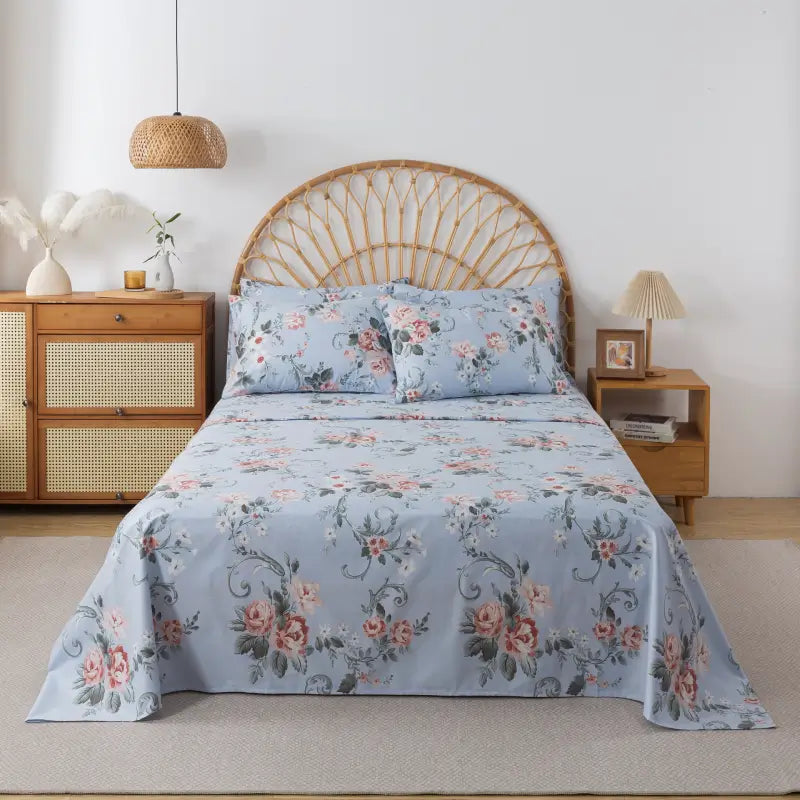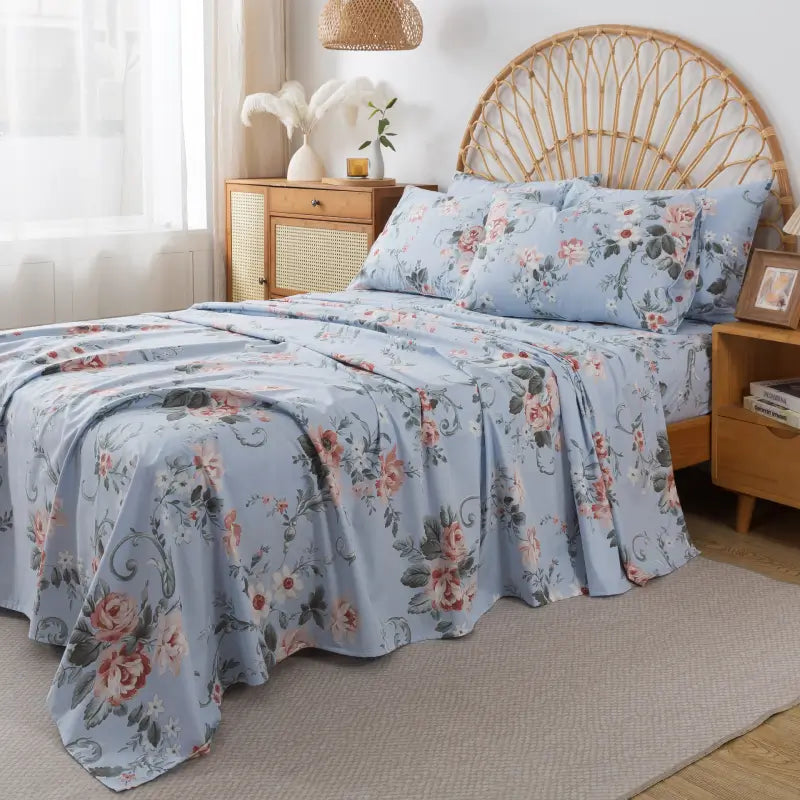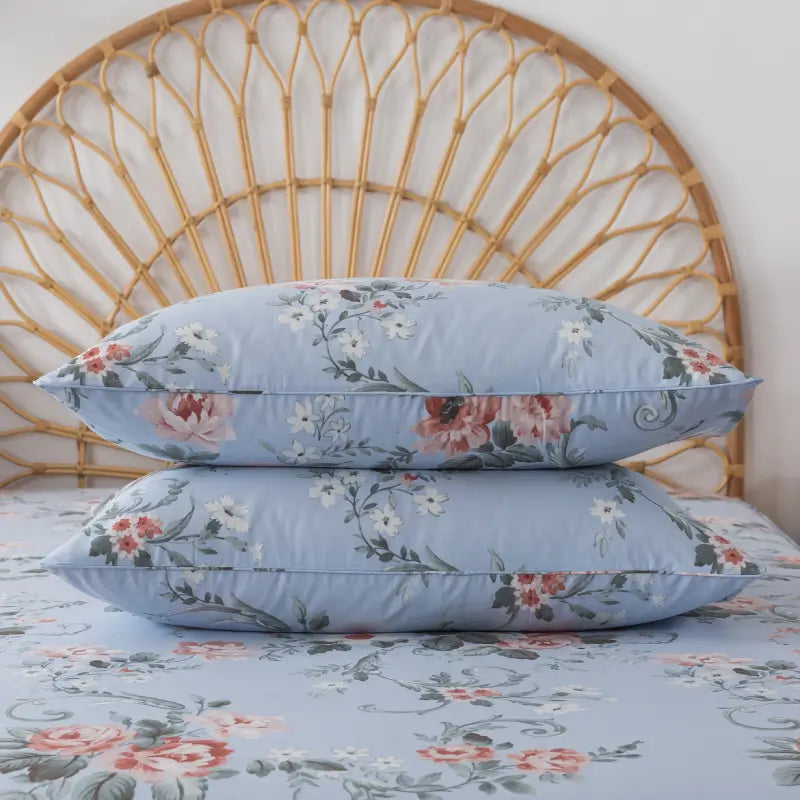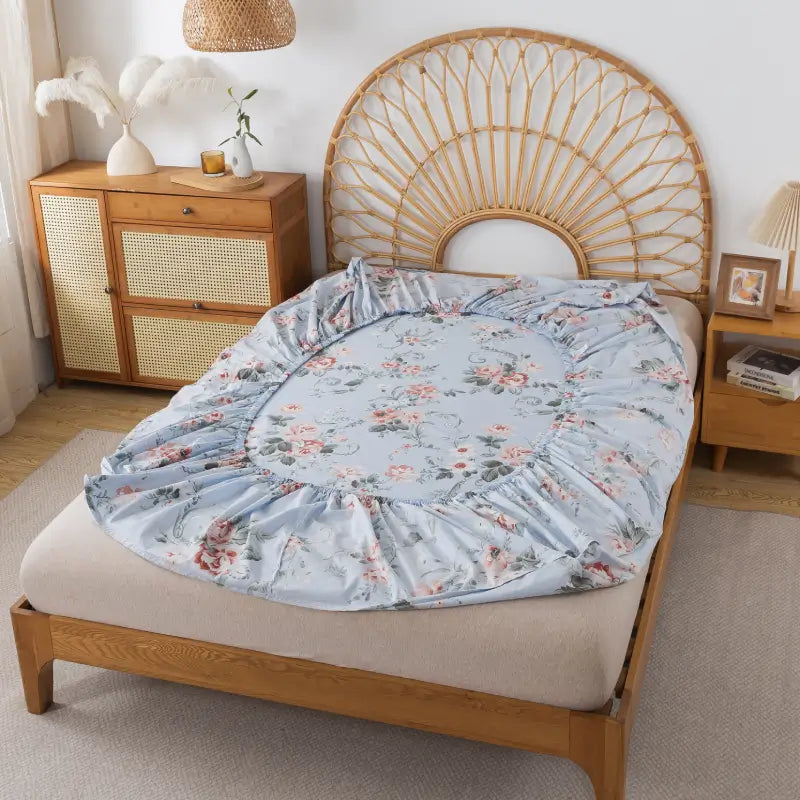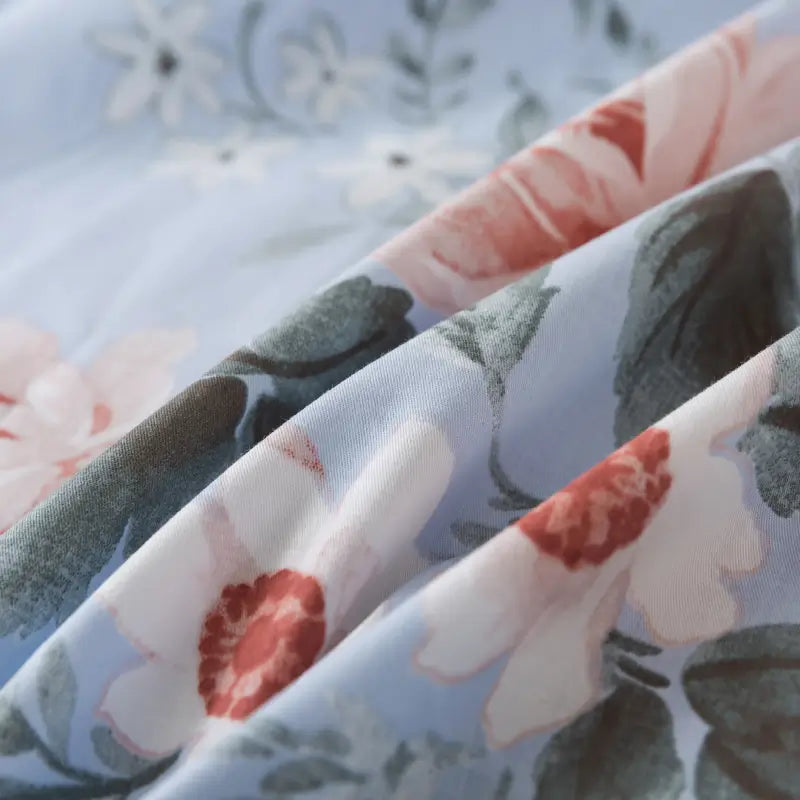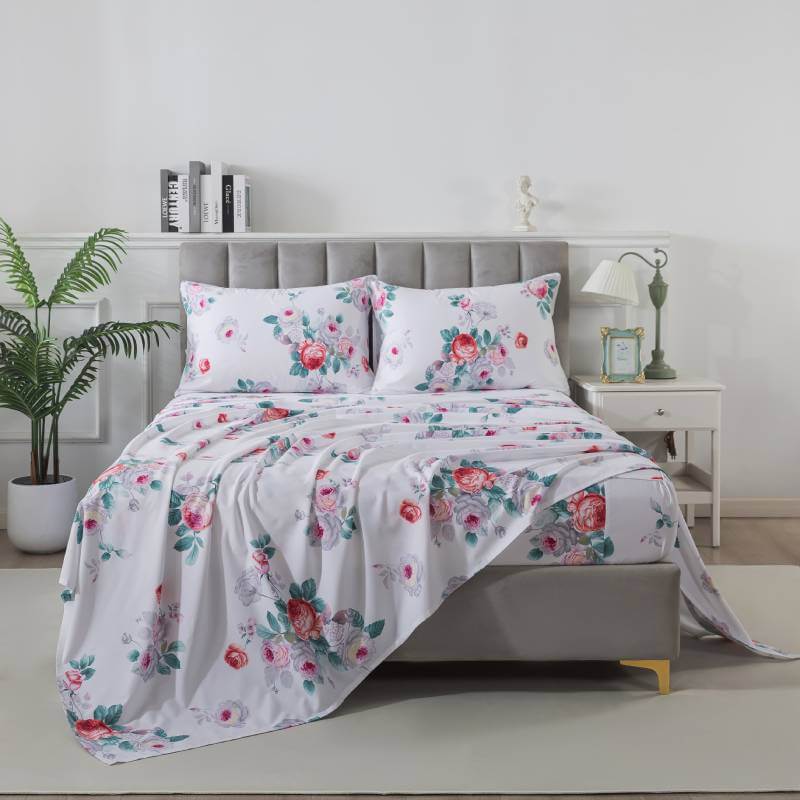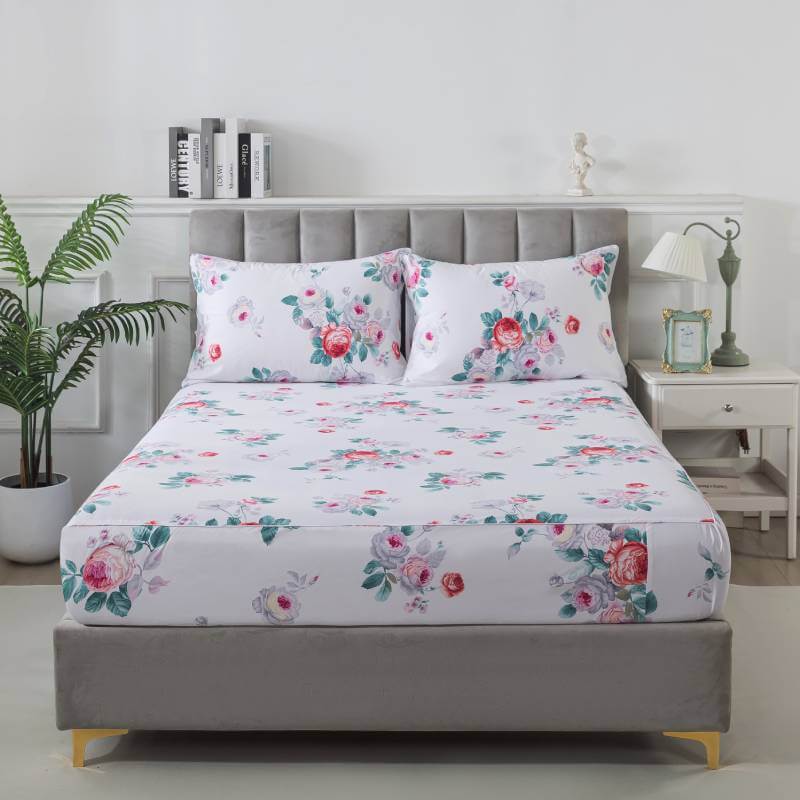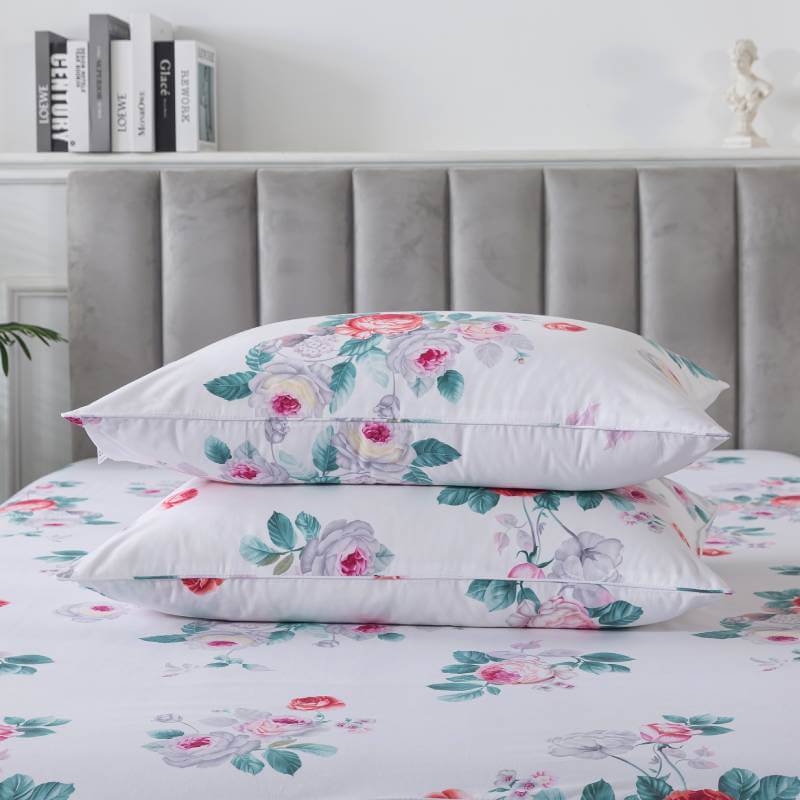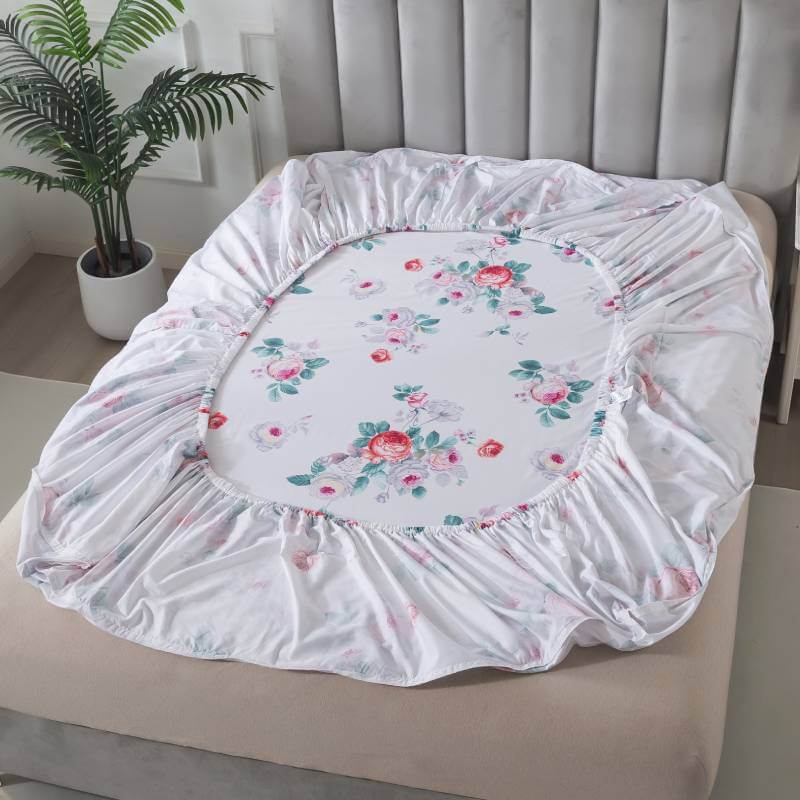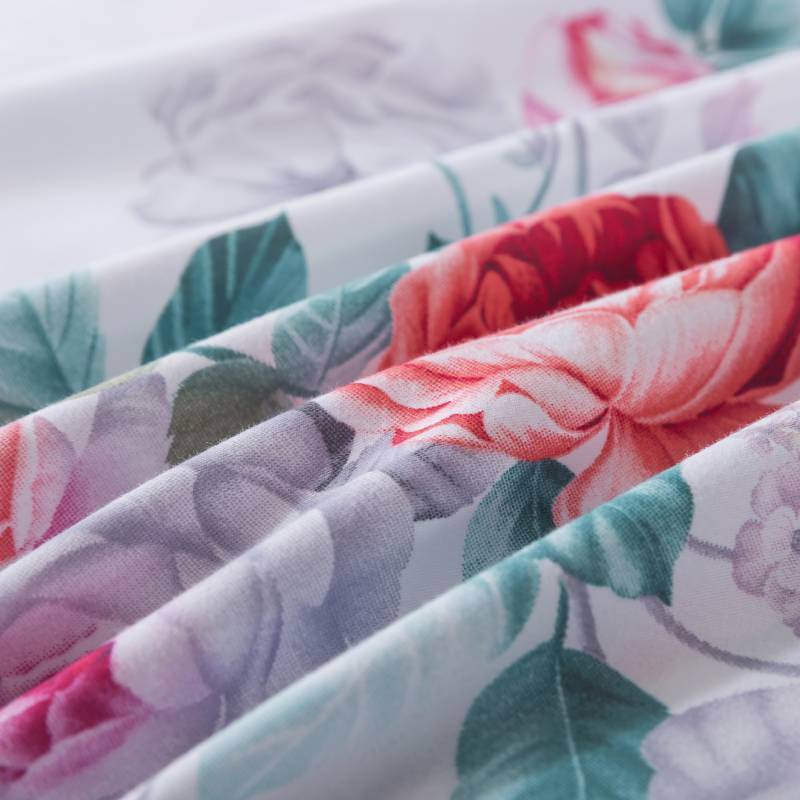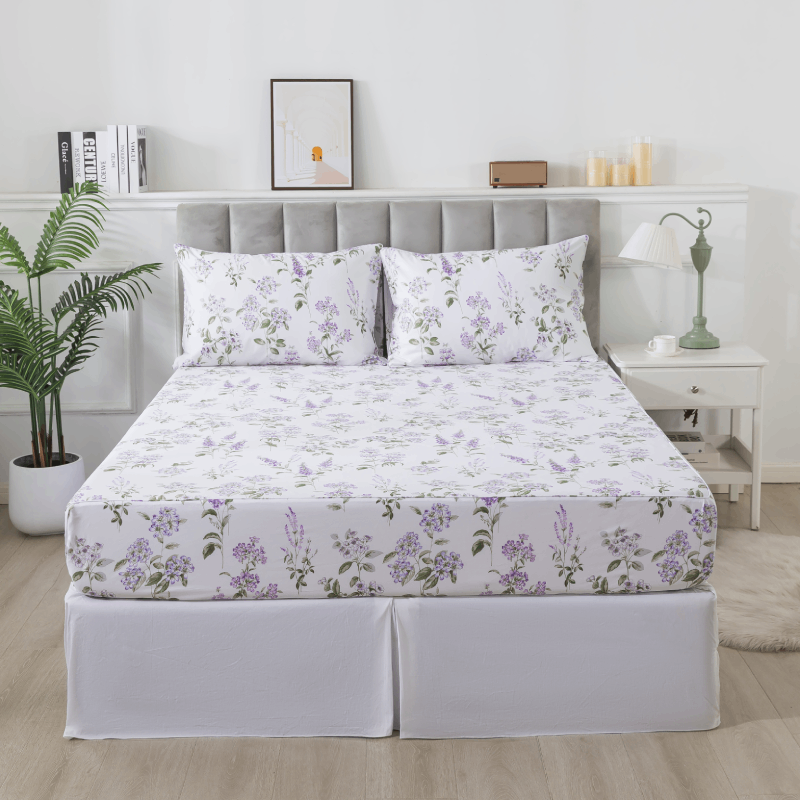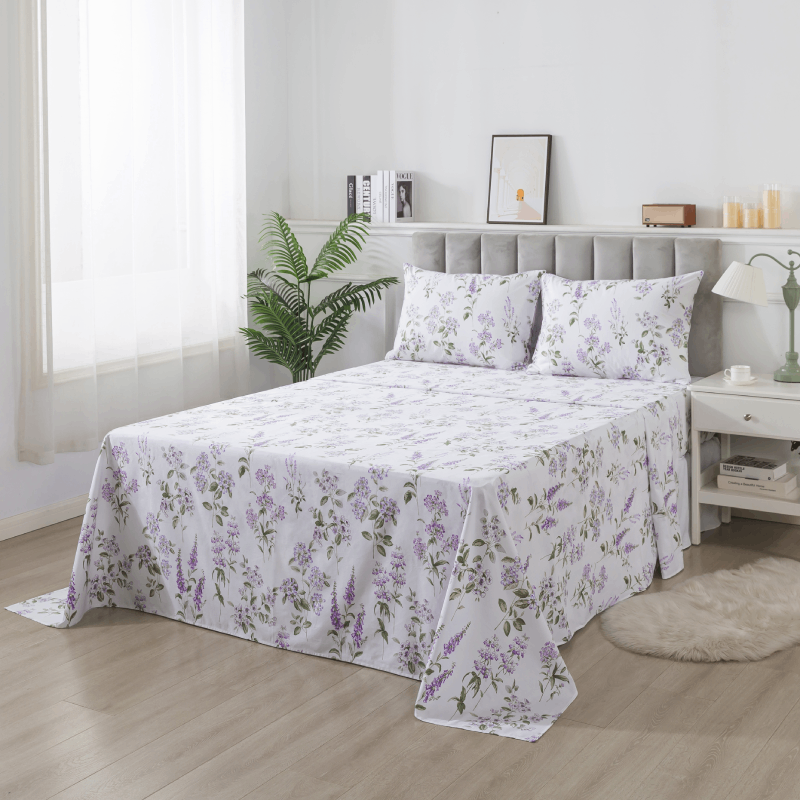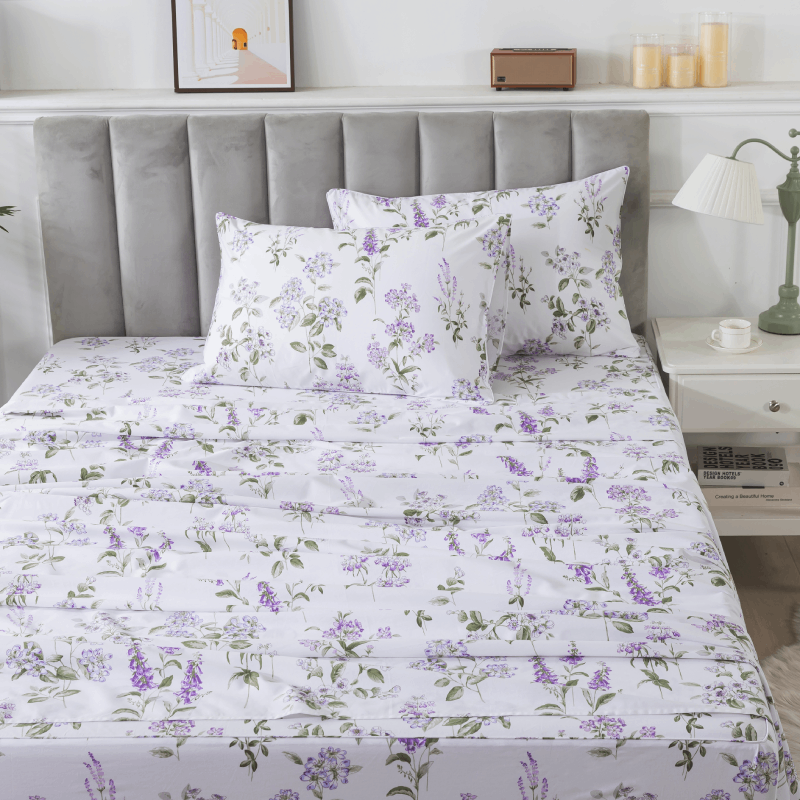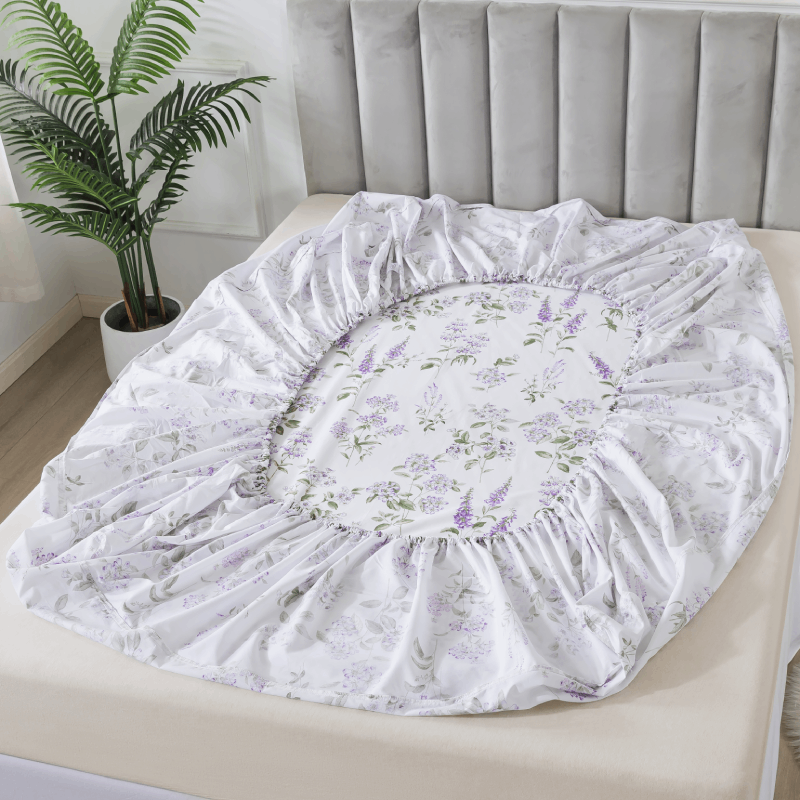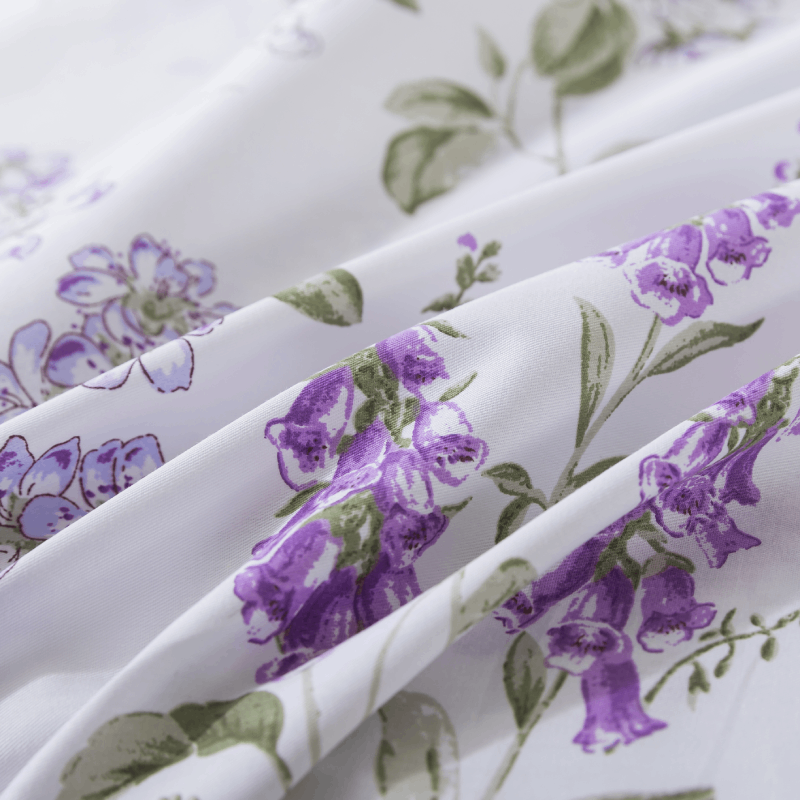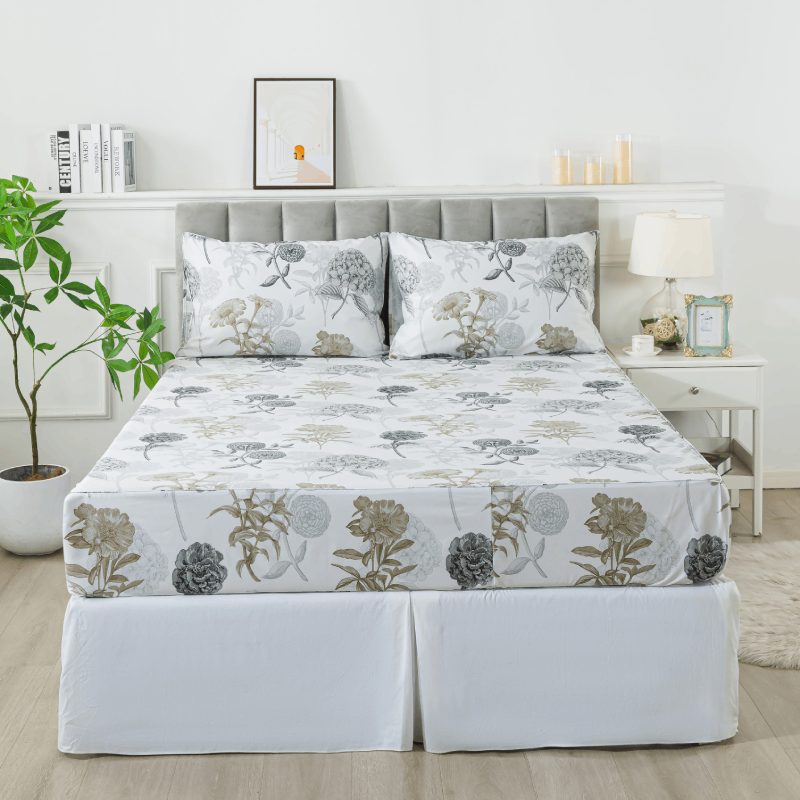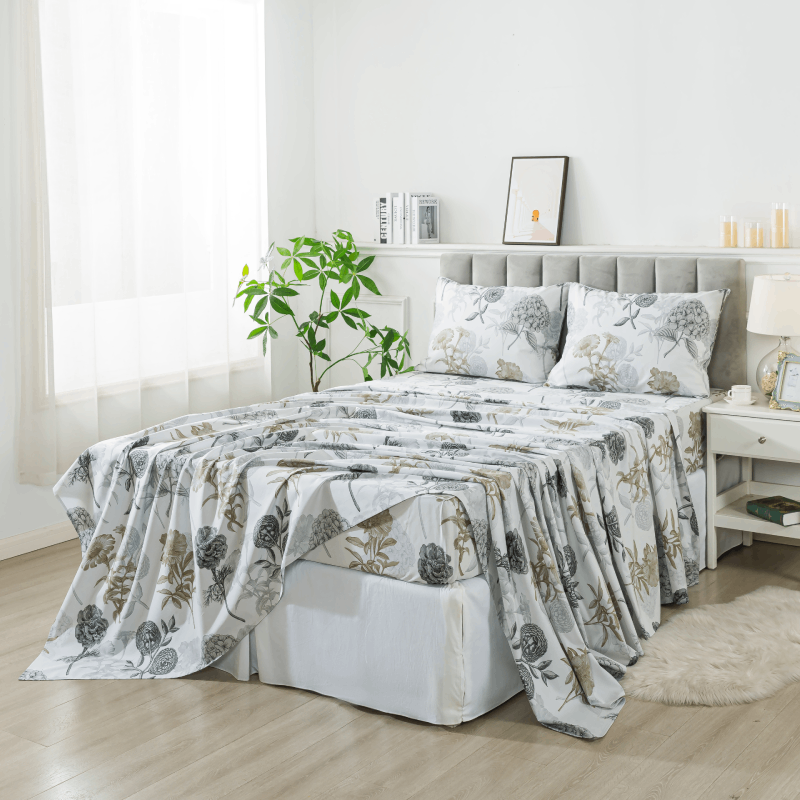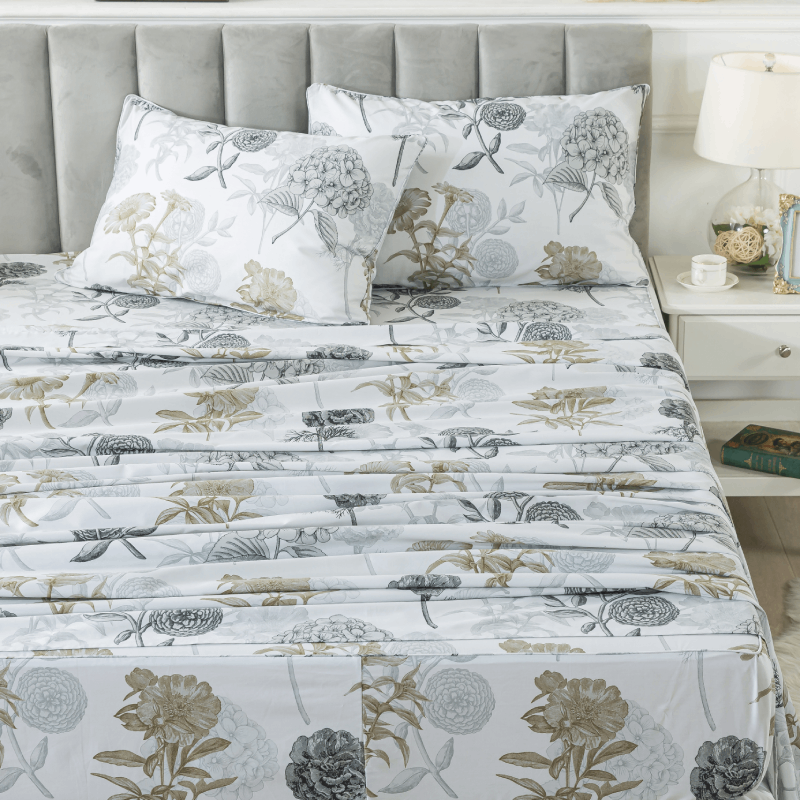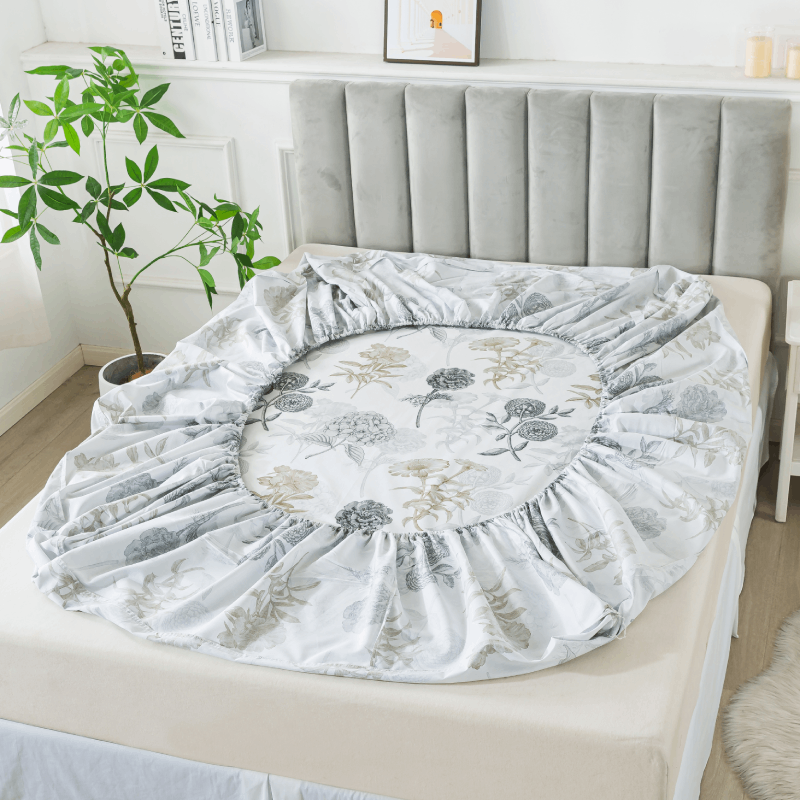
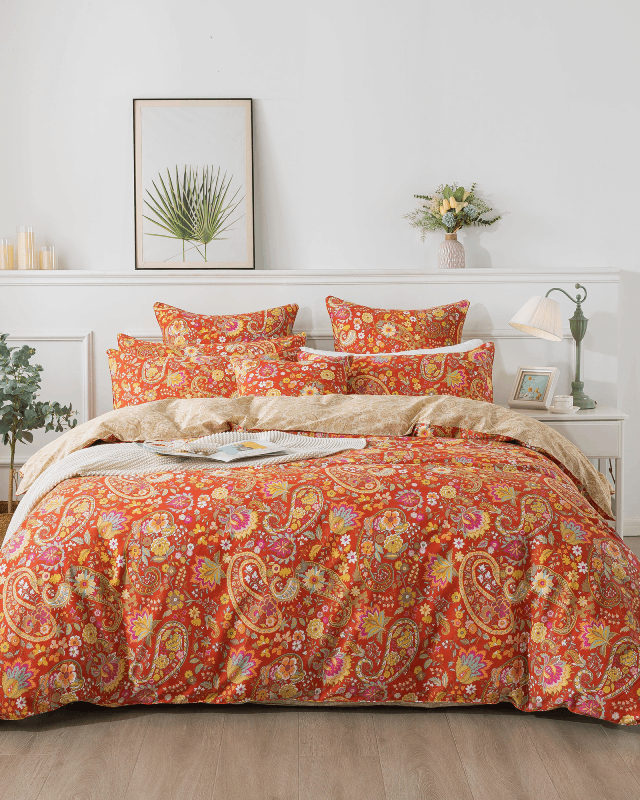
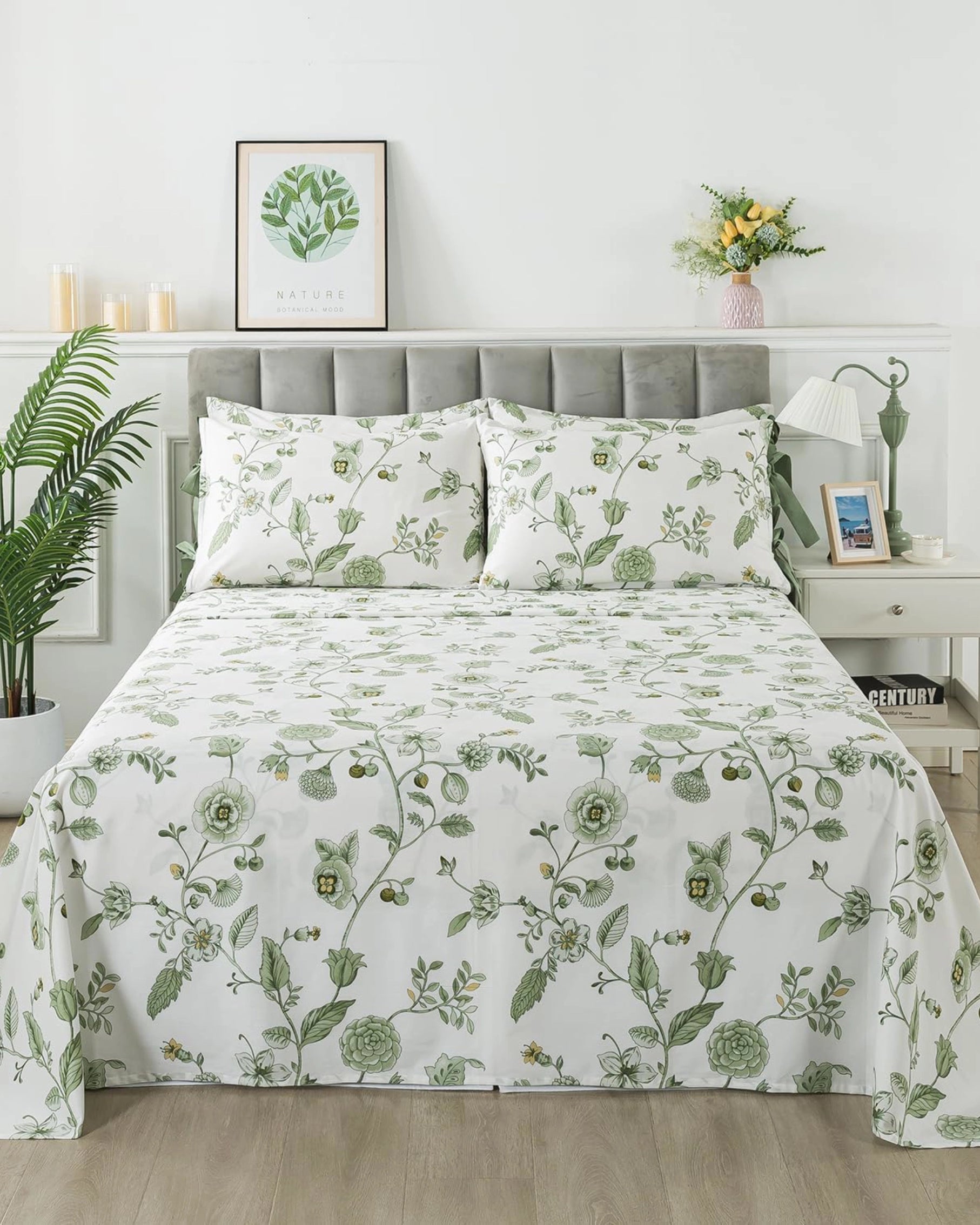


Floral bedding can instantly bring warmth, personality, and a sense of life into a bedroom. But many people hesitate to choose floral patterns because they’re unsure how to coordinate them with other elements like curtains, rugs, and wall art—without the space feeling overwhelming or chaotic.
The good news is that matching floral bedding doesn’t require strict rules or perfect symmetry. With a few thoughtful principles, floral patterns can become the anchor of a calm, cohesive bedroom rather than the source of visual clutter.
Below is a practical, design-forward guide to making floral bedding work beautifully with the rest of your space.

Start with the Bedding as the Visual Anchor
Floral bedding naturally draws the eye, so treat it as the starting point for the entire room. Before choosing or adjusting anything else, look closely at the bedding itself:
-
Color palette: Identify one dominant color and one or two secondary tones.
-
Pattern scale: Is the floral print large and expressive, or small and delicate?
-
Overall mood: Romantic, vintage, modern, soft, or playful?
Once you define these characteristics, every other element should support—not compete with—the bedding.
Curtains: Echo the Color, Not the Pattern
When pairing curtains with floral bedding, restraint is key.
Best Practices
-
Solid or near-solid colors work best. Choose a curtain color pulled directly from the bedding’s floral palette.
-
Match intensity, not exact shade. If the florals are soft and muted, avoid overly saturated curtains.
-
Light textures add balance. Linen, cotton voile, or lightly textured weaves keep the room airy.
What to Avoid
-
Large floral prints on both bedding and curtains
-
High-contrast patterns that introduce new colors not found in the bedding
The goal is to let the bedding remain the hero while curtains quietly frame the space.
Rugs: Ground the Room with Simplicity
Rugs play a different role than curtains—they anchor the room physically and visually. When floral bedding is involved, rugs should provide stability.
Smart Rug Choices
-
Neutral bases: Cream, beige, soft gray, or warm sand tones
-
Low-key patterns: Subtle geometrics, faded vintage textures, or tone-on-tone designs
-
Natural materials: Cotton, wool, or flat-weave rugs complement floral softness
If You Want Pattern
If you prefer a patterned rug, keep it understated and ensure:
-
The pattern scale differs from the bedding
-
The colors stay within the bedding’s existing palette
A calm rug allows floral bedding to feel intentional rather than busy.
Wall Art: Think Mood First, Theme Second
Wall art doesn’t need to “match” floral bedding literally. In fact, avoiding direct repetition often creates a more sophisticated look.
Art That Works Well
-
Abstract or minimal art that reflects the bedding’s color mood
-
Botanical sketches or line drawings instead of full-color florals
-
Landscape photography with soft, natural tones
Placement Matters
-
Keep wall art limited to one or two focal areas
-
Avoid crowding every wall, especially in smaller bedrooms
Wall art should reinforce the atmosphere the floral bedding creates—not explain it again.
Use Repetition Carefully (and Sparingly)
A cohesive bedroom often repeats certain elements—but repetition should be subtle.
Examples of gentle repetition:
-
A throw pillow that picks up one accent color from the floral print
-
A small decorative object echoing the bedding’s tone
-
A rug border that quietly mirrors a floral hue
Avoid repeating the full floral motif across multiple surfaces. One strong pattern is usually enough.
Balance Pattern with Negative Space
One of the most overlooked aspects of styling floral bedding is negative space—areas where the eye can rest.
Ways to create breathing room:
-
Solid-color sheets beneath a floral quilt or duvet
-
Plain walls around the bed
-
Minimal furniture silhouettes
Negative space prevents florals from feeling heavy and keeps the bedroom restful.
Consider the Lifestyle, Not Just the Look
Finally, remember that a bedroom is lived in, not staged.
-
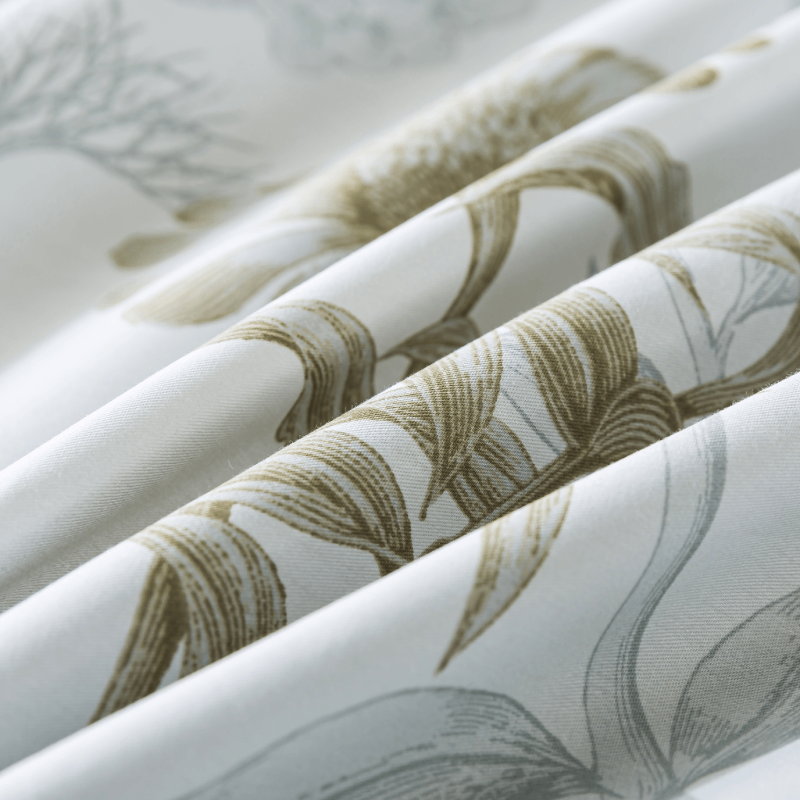
Softer, breathable fabrics make florals feel welcoming
-
Easy-care textiles ensure the room stays comfortable over time
-
Slight wrinkles and natural textures often enhance floral designs rather than detract from them
A well-matched bedroom should feel calm every night—not just look good in photos.
Final Thoughts
Matching floral bedding with curtains, rugs, and wall art isn’t about finding identical patterns or following rigid design rules. It’s about balance—between pattern and calm, color and neutrality, expression and restraint.
When floral bedding is treated as the centerpiece and everything else is chosen to support its mood, the result is a bedroom that feels layered, intentional, and deeply comfortable.
Floral patterns don’t have to be bold statements. With the right companions, they become part of a space that quietly feels like home.