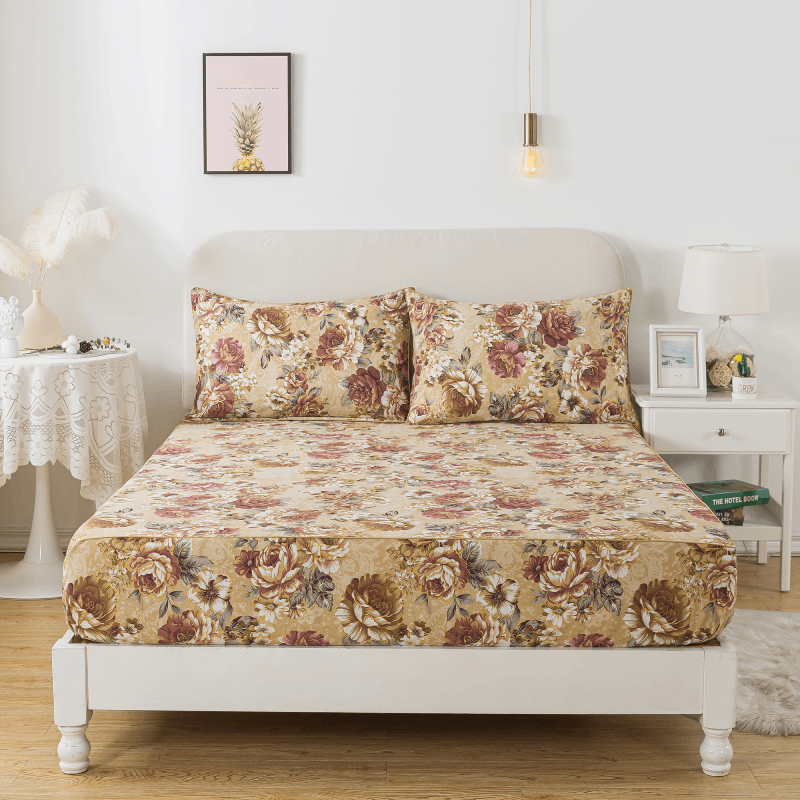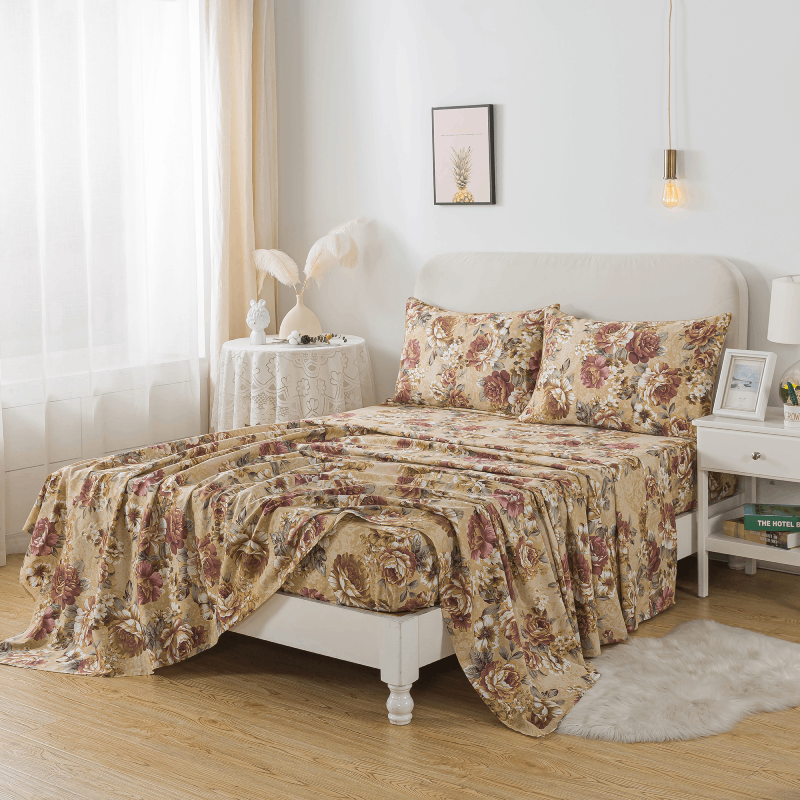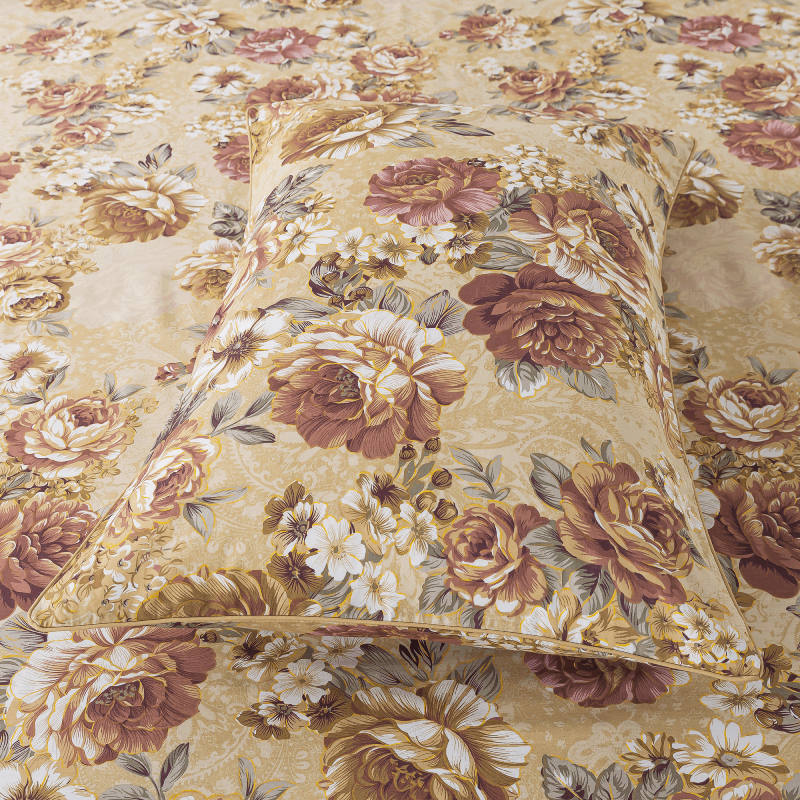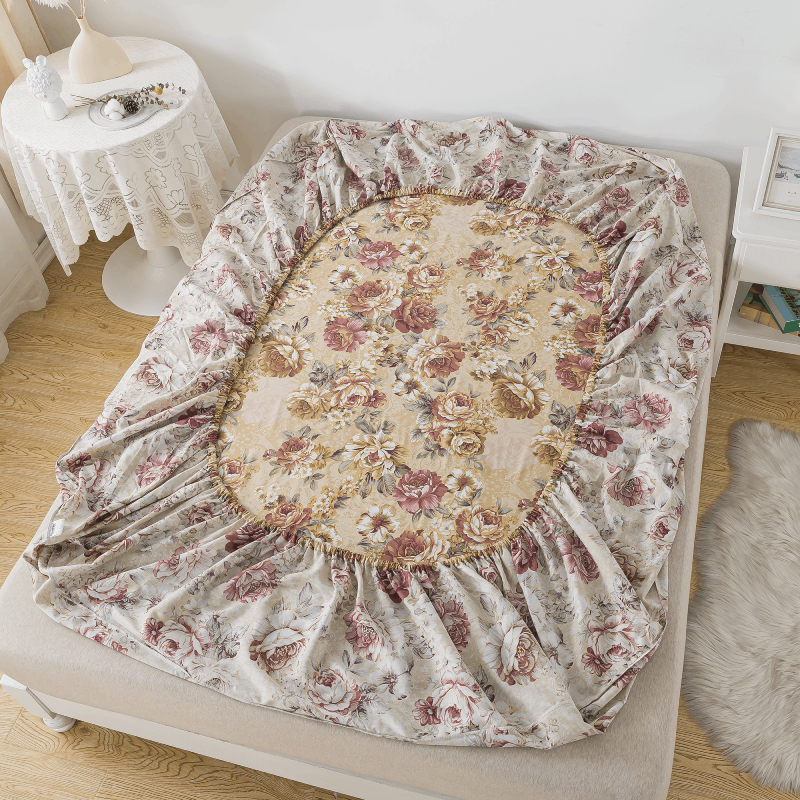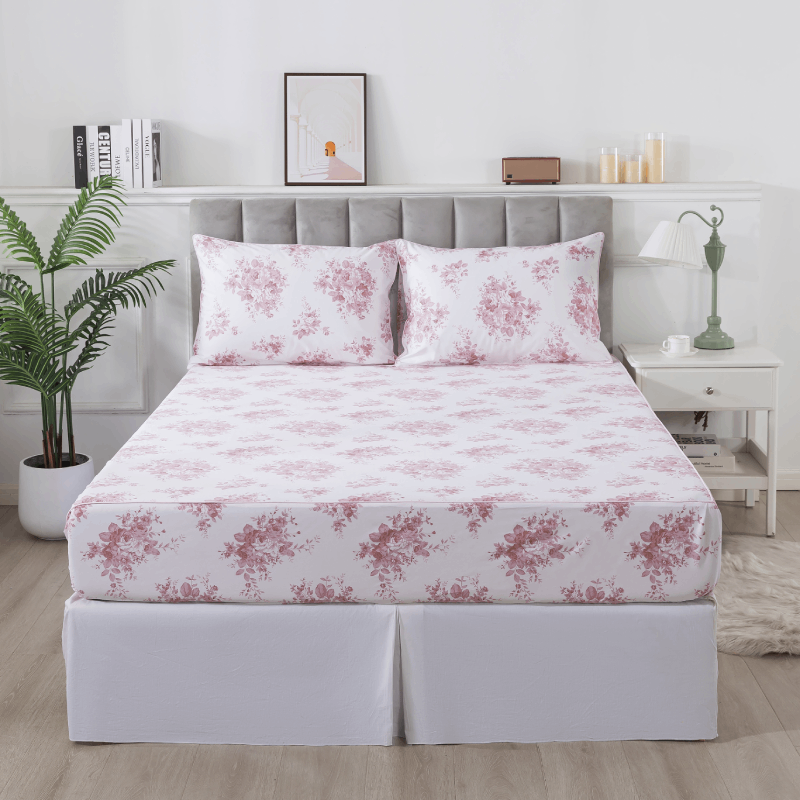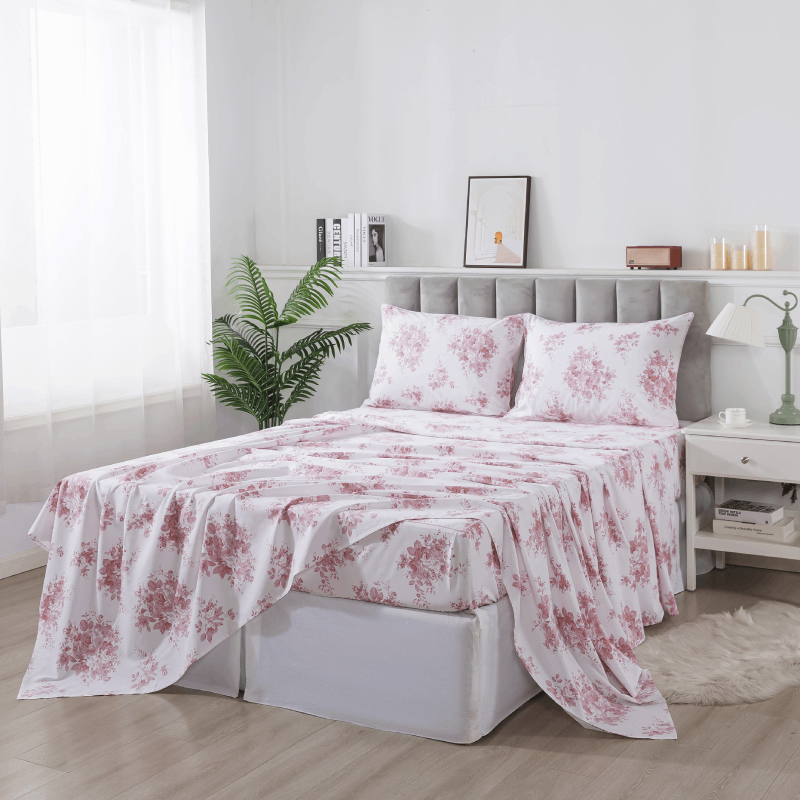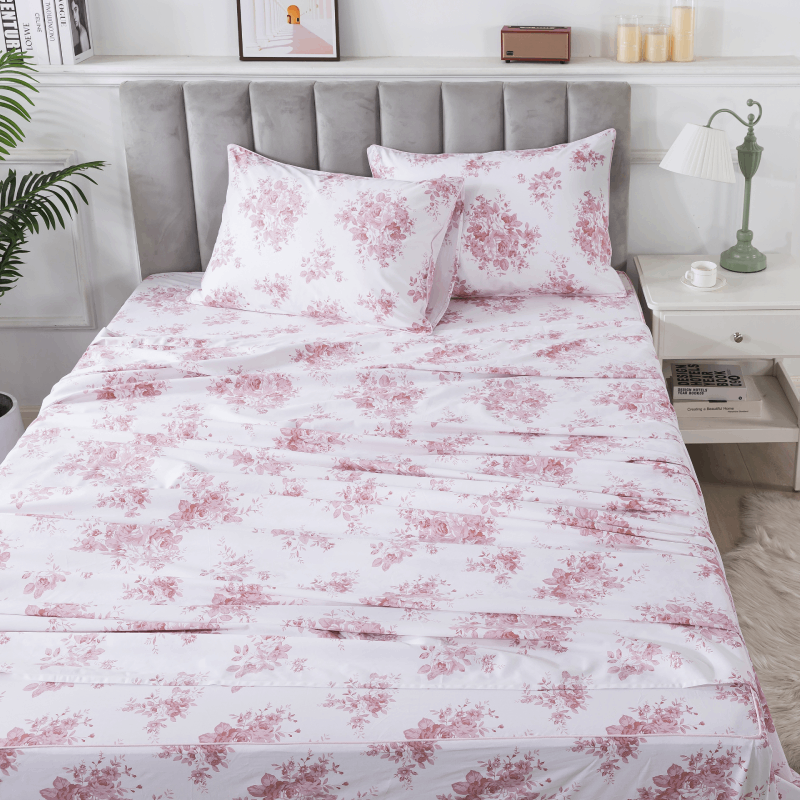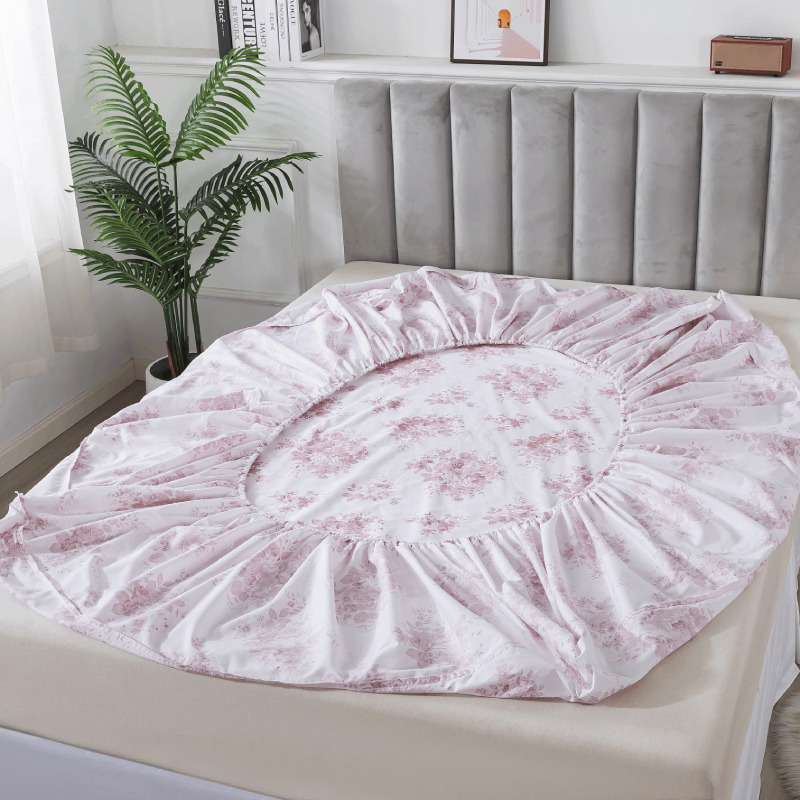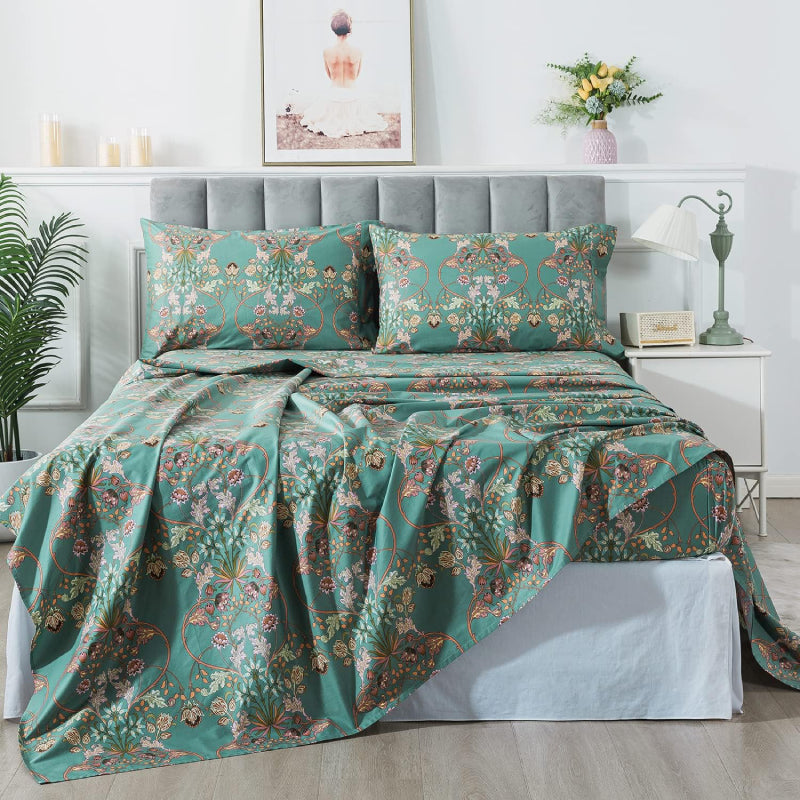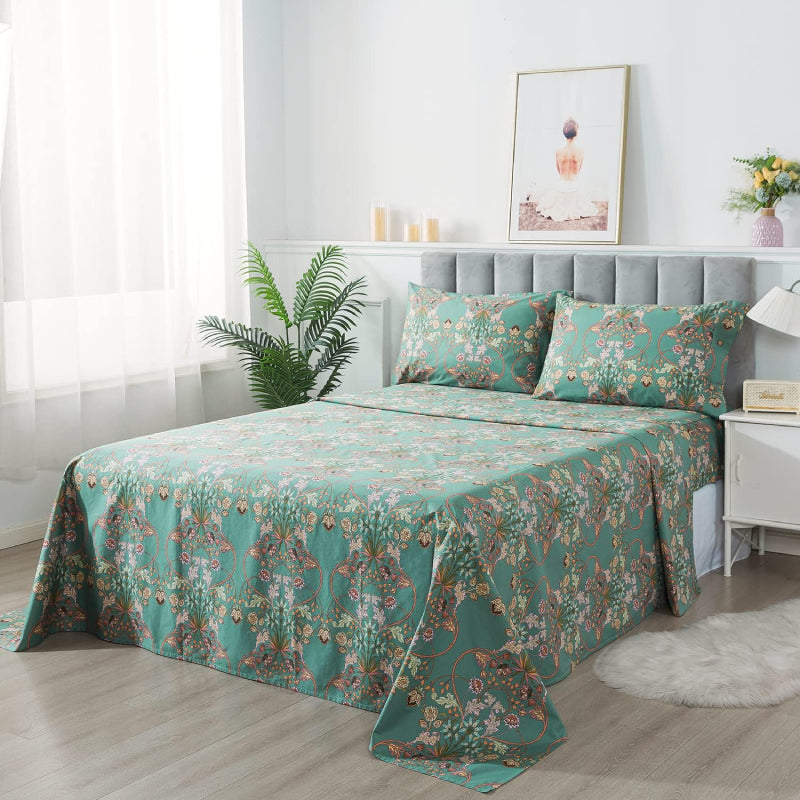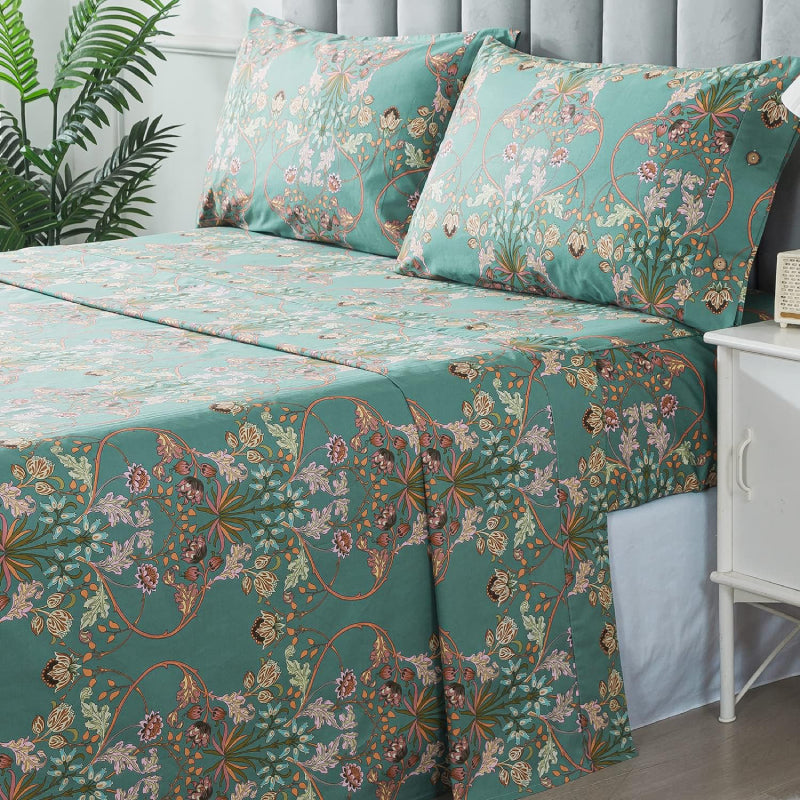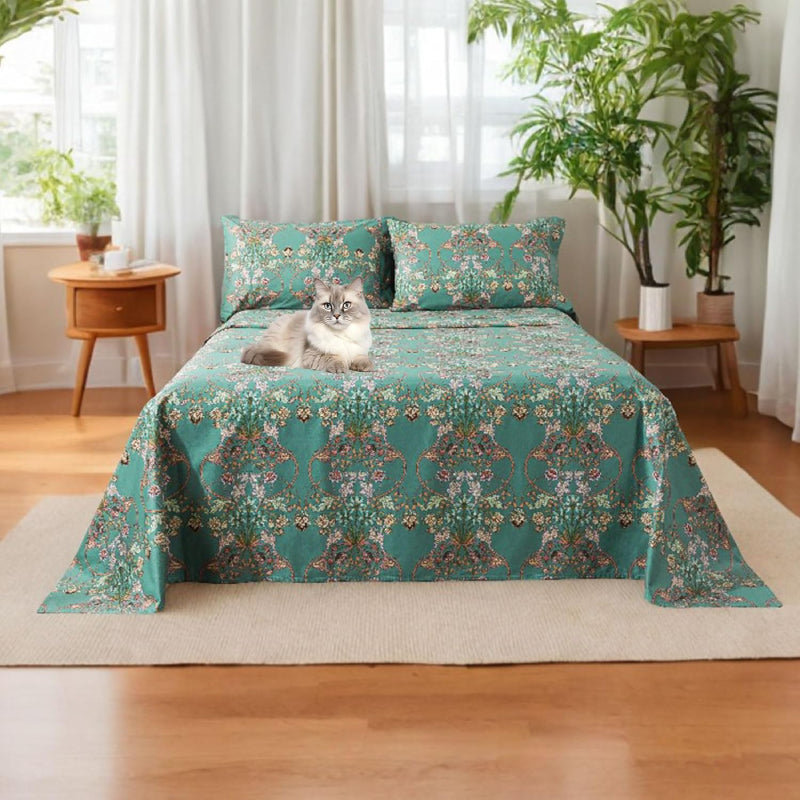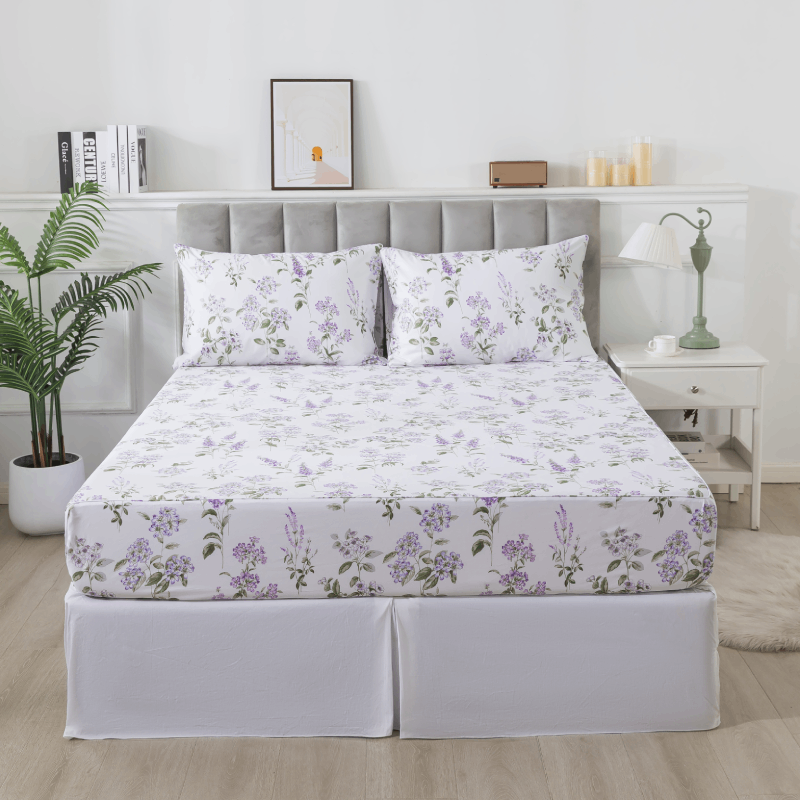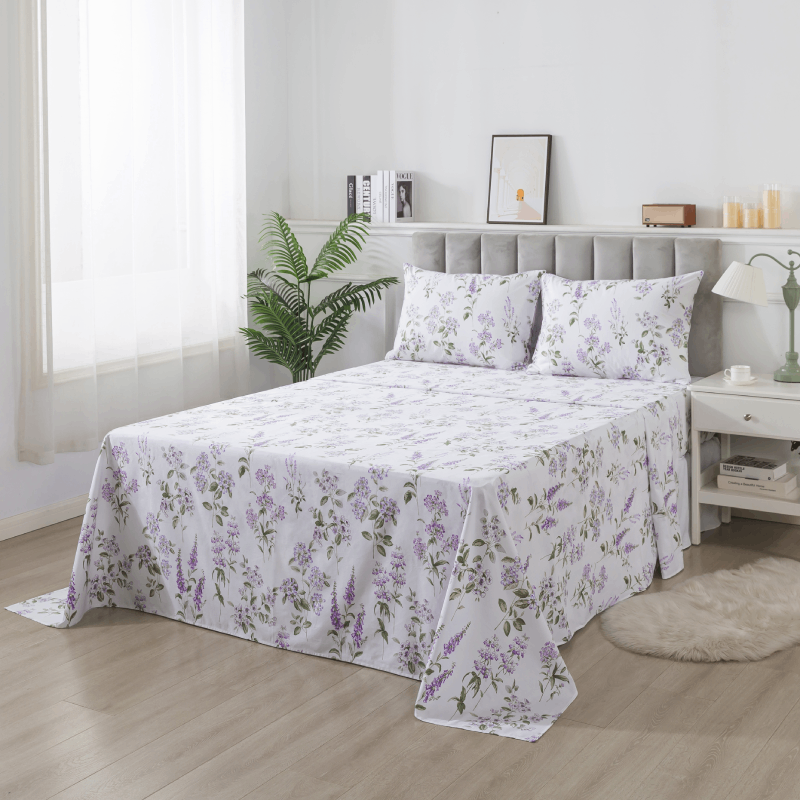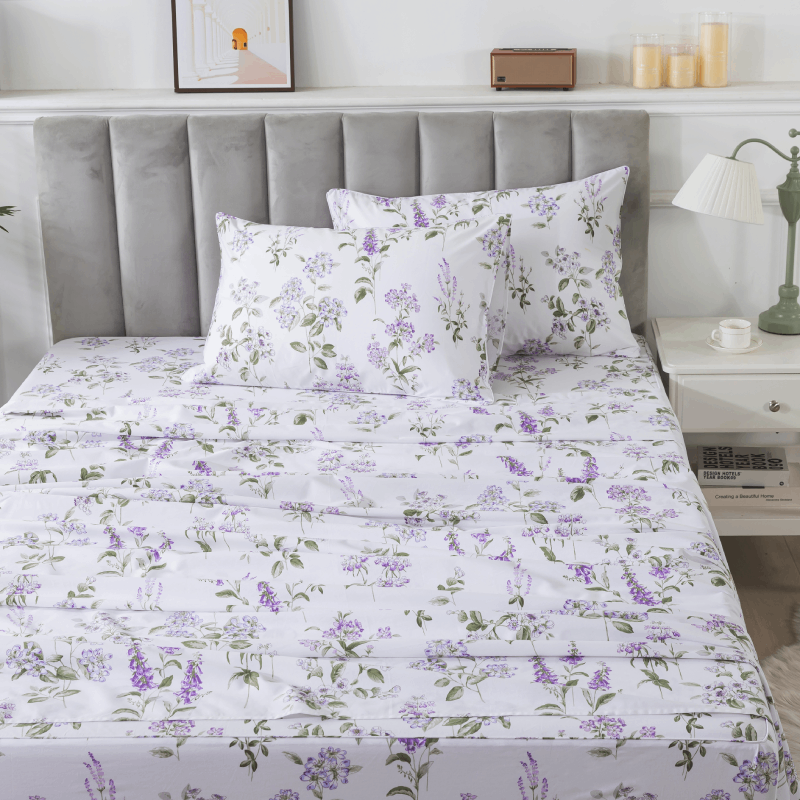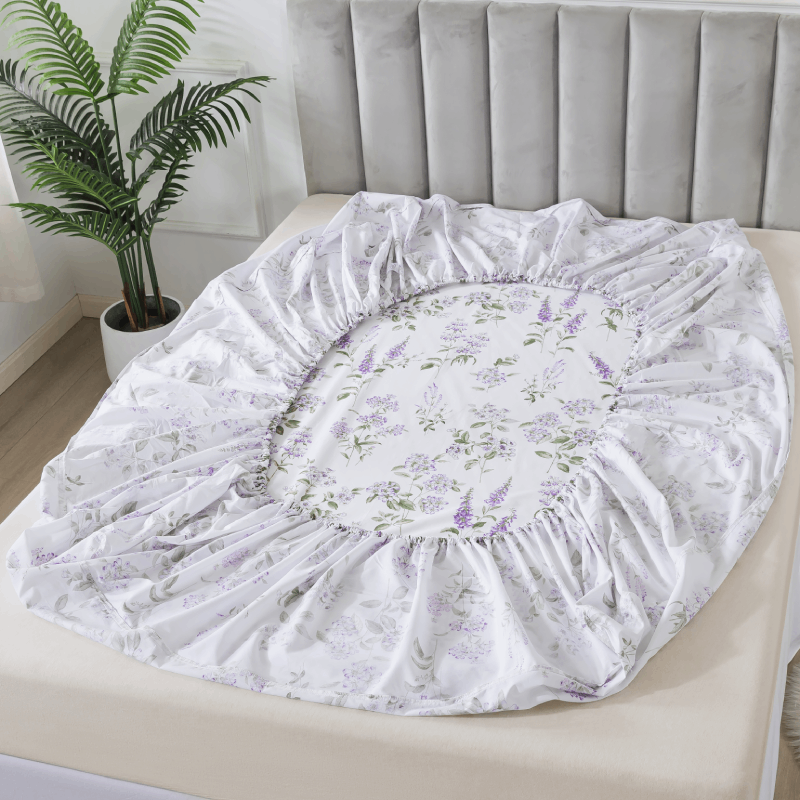



Low-light bedrooms can feel calm and cocooning—but they also risk looking flat, heavy, or even a little dull if the design isn’t handled carefully. Floral bedding, when chosen with intention, is one of the most effective ways to bring life, depth, and quiet elegance into a dimly lit space. The key lies in balancing pattern, color, texture, and material so the room feels brighter without relying on artificial brightness.
1. Choose Light-Reflective Color Palettes
In low-light environments, color behaves differently. Dark florals can easily disappear into shadows, while overly bright tones can feel disconnected from the room’s mood. The optimal approach is to work within a soft, light-reflective palette.
Look for:
- Cream, ivory, and soft beige bases
- Muted pastels like dusty rose, sage green, lavender, or pale blue
- Florals with gentle contrast rather than stark color jumps
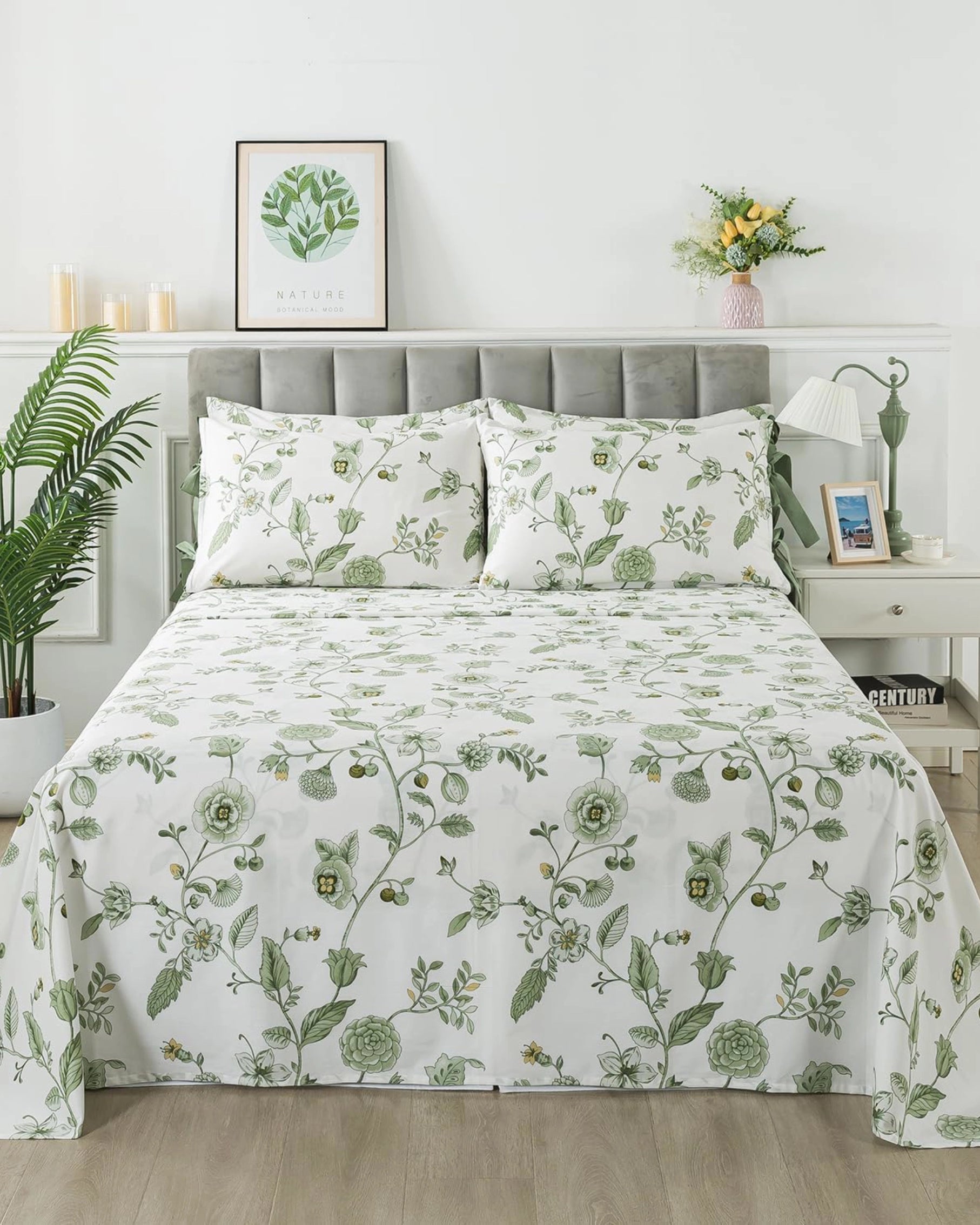
These tones don’t just “look lighter”—they actively bounce what little natural light is available, subtly lifting the entire space. A floral pattern on a warm ivory base, for example, can feel luminous even in a north-facing bedroom.
2. Opt for Medium-Scale Floral Patterns
Pattern scale plays a critical role in how bedding reads in low light.
- Large-scale florals can feel too bold and heavy, especially if contrast is high
- Tiny micro-florals may visually blur and lose definition in dim conditions
The sweet spot is medium-scale florals—large enough to remain visible, but refined enough to avoid overwhelming the room. This scale creates visual interest without requiring strong lighting to “read” the pattern.
3. Prioritize Breathable, Soft Cotton Textures
Texture becomes more important as light decreases. In a low-light bedroom, tactile qualities often replace visual brightness.
High-quality cotton—especially double gauze cotton—works particularly well because:
- It has a naturally soft, slightly crinkled texture that catches light gently
- It avoids the flat, lifeless look of overly smooth synthetic fabrics
- It becomes softer over time, enhancing the lived-in, cozy aesthetic
Unlike glossy materials, which can create harsh reflections, cotton diffuses light softly, adding depth without glare. This makes the bedding feel inviting rather than stark.

4. Use Subtle Contrast to Define the Space
Without enough contrast, floral bedding can blend into the background. But too much contrast can feel jarring.
The goal is layered contrast:
- Florals that are slightly darker or lighter than the base fabric
- Gentle outlining in the pattern (e.g., soft green stems against an ivory background)
- Coordinated sheets or pillowcases that introduce a secondary tone
This approach gives the bed definition and structure while maintaining a calm, cohesive look.
5. Lean Into “Quiet Luxury” Florals
Low-light bedrooms naturally lend themselves to a more restrained, elevated aesthetic. Instead of bold, high-saturation prints, consider florals that feel understated and refined.
Characteristics of quiet luxury florals:
- Washed or slightly faded color tones
- Painterly or vintage-inspired motifs
- Minimal visual noise—no overly busy compositions
These designs feel intentional and timeless, aligning perfectly with the soft, intimate atmosphere of a dim bedroom.
6. Layer Strategically for Depth
Layering is essential when light is limited. It helps create dimension that lighting alone cannot provide.
Effective layering includes:
- A floral duvet cover paired with solid or lightly textured sheets
- Quilts or throws in complementary neutral tones
- Multiple pillow layers mixing pattern and solid colors
Each layer adds visual and tactile variation, preventing the bed from looking flat.
7. Consider Seasonal Adaptability
Low-light rooms often feel cooler, both visually and physically. Your bedding choice should support year-round comfort.
Breathable cotton floral bedding offers:
- Airflow in warmer months
- Gentle insulation when layered in colder seasons
This versatility ensures the room always feels balanced—never too heavy, never too sparse.
8. Avoid Overly Dark Backgrounds
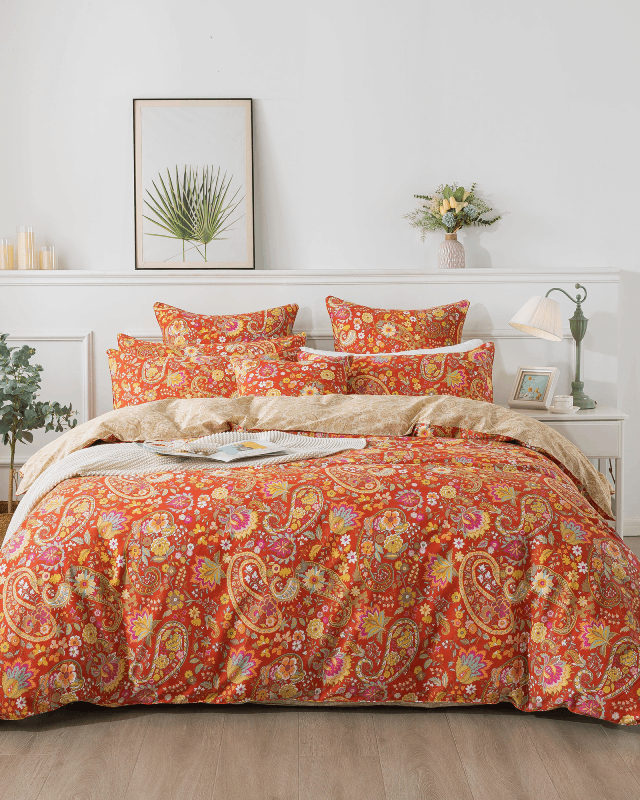
While dark floral bedding can be dramatic, it’s rarely ideal for low-light bedrooms unless used very carefully. Deep navy, charcoal, or black backgrounds tend to absorb light, making the room feel smaller and heavier.
If you prefer darker tones:
- Choose softened versions (e.g., faded navy instead of deep midnight blue)
- Ensure the floral pattern includes lighter elements to break up the darkness
9. Let the Bedding Be the Focal Point
In a dim room, you don’t need multiple competing design elements. Floral bedding can—and should—carry the visual weight.
Keep surrounding elements simple:
- Neutral walls
- Minimal decor
- Soft, diffused lighting
This allows the bedding to stand out without overwhelming the space.
Final Thoughts
Designing a low-light bedroom isn’t about fighting the lack of light—it’s about working with it. Floral bedding offers a natural way to introduce softness, depth, and quiet beauty without relying on brightness.
By focusing on light-reflective tones, balanced patterns, breathable textures, and thoughtful layering, you can transform even the dimmest bedroom into a space that feels warm, inviting, and effortlessly elegant.
In the end, the best floral bedding doesn’t just decorate the room—it reshapes how the room feels.