


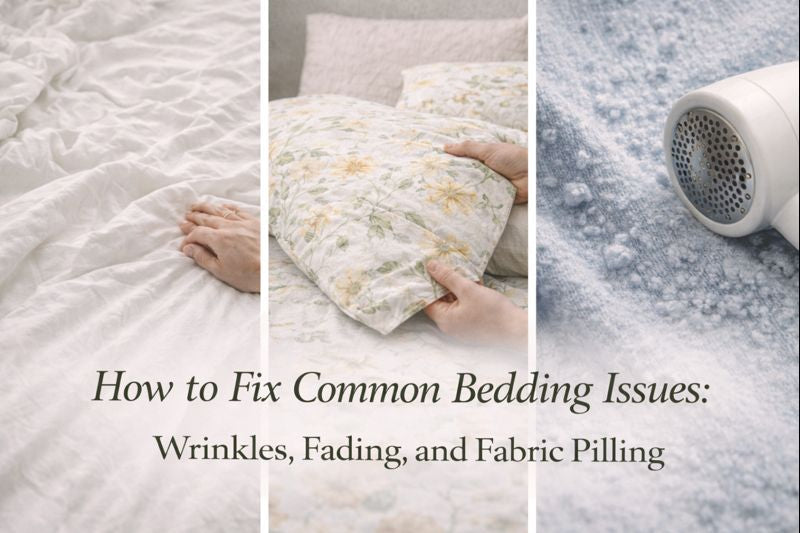
Even the highest-quality bedding can show signs of wear over time. Wrinkles, fading colors, and fabric pilling are some of the most common concerns people face—but they are not inevitable. In most cases, these issues are the result of care habits rather than fabric failure.
With the right techniques, you can restore the appearance of your bedding, extend its lifespan, and keep it looking fresh and inviting for years.
Understanding Why Bedding Issues Happen
Before fixing common problems, it helps to understand their causes.
Most bedding issues stem from:
• Improper washing temperatures
• Over-drying or excessive heat
• Harsh detergents
• Friction during washing and daily use
• Fabric quality and fiber type
Once you know the source, prevention becomes much easier.
How to Reduce and Remove Wrinkles
Why Bedding Wrinkles
Wrinkles form when fibers dry unevenly or remain compressed for too long. Natural fabrics like cotton and linen are especially prone to wrinkling—but they also respond well to proper care.
Solutions for Wrinkle-Free Bedding
• Remove bedding promptly from the dryer while slightly damp
• Shake out sheets and duvet covers before folding or making the bed
• Use a lower heat setting and longer drying cycle
• Steam bedding lightly rather than ironing aggressively
For a naturally relaxed look, smooth the bedding by hand and allow body heat to soften remaining creases.
Preventing Wrinkles Long-Term
• Avoid overloading the washer
• Choose wrinkle-resistant weaves like sateen if preferred
• Line-dry partially before finishing in the dryer
Small adjustments make a noticeable difference.
How to Prevent and Minimize Fading
Why Colors Fade
Fading is usually caused by excessive heat, harsh detergents, and frequent exposure to sunlight. Bright and dark colors are most vulnerable.
Protecting Color Vibrancy
• Wash bedding in cold or lukewarm water
• Turn items inside out before washing
• Use mild, color-safe detergents
• Avoid bleach unless absolutely necessary
When drying, opt for low heat or air-drying whenever possible.
Storage Tips to Reduce Fading
• Store bedding away from direct sunlight
• Use breathable fabric bags instead of plastic
• Rotate bedding regularly to distribute wear
Proper storage preserves color as much as washing habits do.

How to Fix and Prevent Fabric Pilling
What Causes Pilling
Pilling occurs when loose fibers break and tangle due to friction. It is more common in lower-quality fibers or blended fabrics but can affect all textiles over time.
Removing Existing Pills
• Use a fabric shaver or sweater comb gently
• Work on a flat surface to avoid pulling
• Avoid scissors, which can damage fibers
Once removed, bedding often looks significantly refreshed.
Preventing Future Pilling
• Wash bedding inside out
• Avoid mixing bedding with rough items like towels
• Choose gentle wash cycles
• Skip fabric softeners, which can weaken fibers
High-quality natural fibers pill less when cared for properly.
Choosing the Right Care Routine for Your Fabric
Different fabrics require different approaches.
General guidance:
• Cotton: Cold wash, low heat dry, remove promptly
• Linen: Gentle cycles, air-dry when possible
• Flannel: Wash separately to reduce friction
• Percale: Avoid high heat to maintain crispness
Always follow manufacturer care instructions for best results.
Small Habits That Make a Big Difference
Consistency matters more than intensity. Simple habits can prevent most bedding issues before they appear.
Helpful routines include:
• Rotating between multiple bedding sets
• Avoiding daily over-washing
• Using mattress and pillow protectors
• Shaking out bedding daily to release tension
These habits extend both comfort and appearance.
When to Accept Natural Wear
Some changes—like softened texture or subtle fading—are signs of natural aging rather than damage. In many cases, they add character and comfort.
The key is distinguishing between normal wear and preventable damage.
Final Thoughts
Wrinkles, fading, and fabric pilling are common—but they are also manageable. With thoughtful care, gentle washing routines, and simple maintenance tools, your bedding can remain beautiful, comfortable, and functional far longer than expected.
Caring for bedding is not about perfection—it’s about preservation. When treated well, quality bedding rewards you with lasting comfort and enduring style.