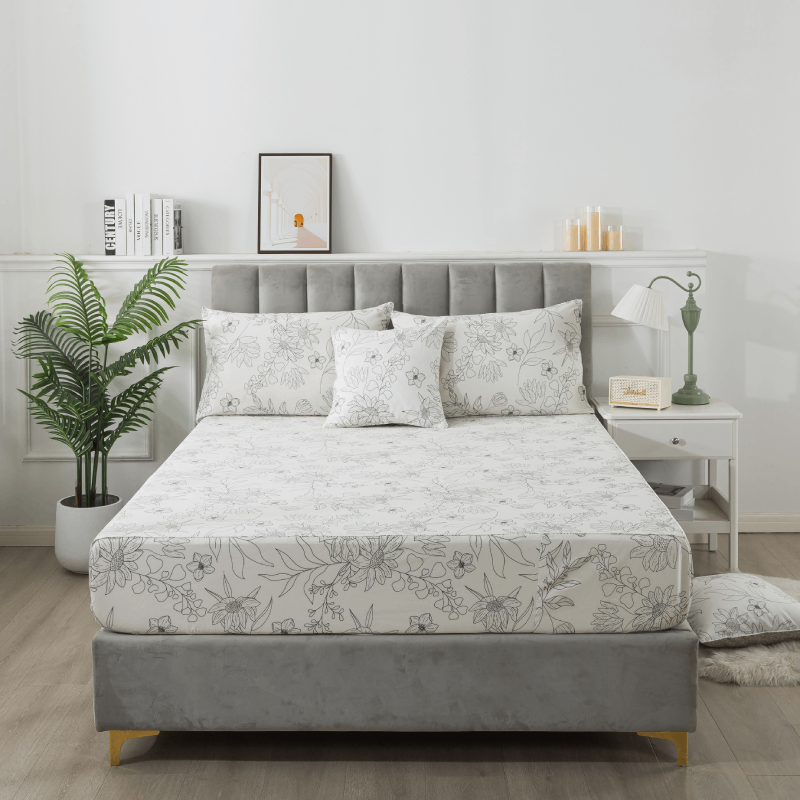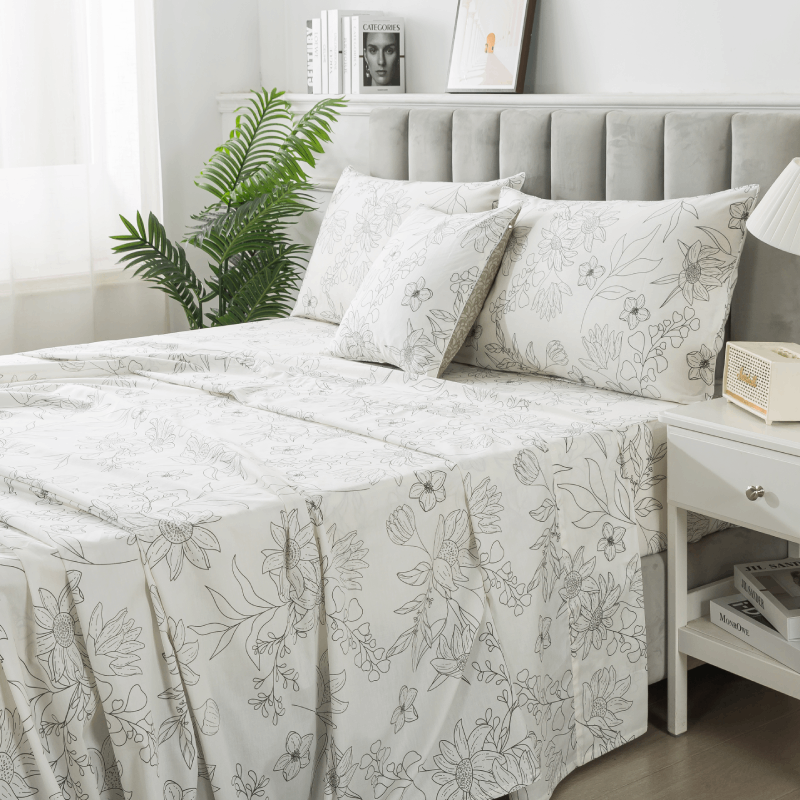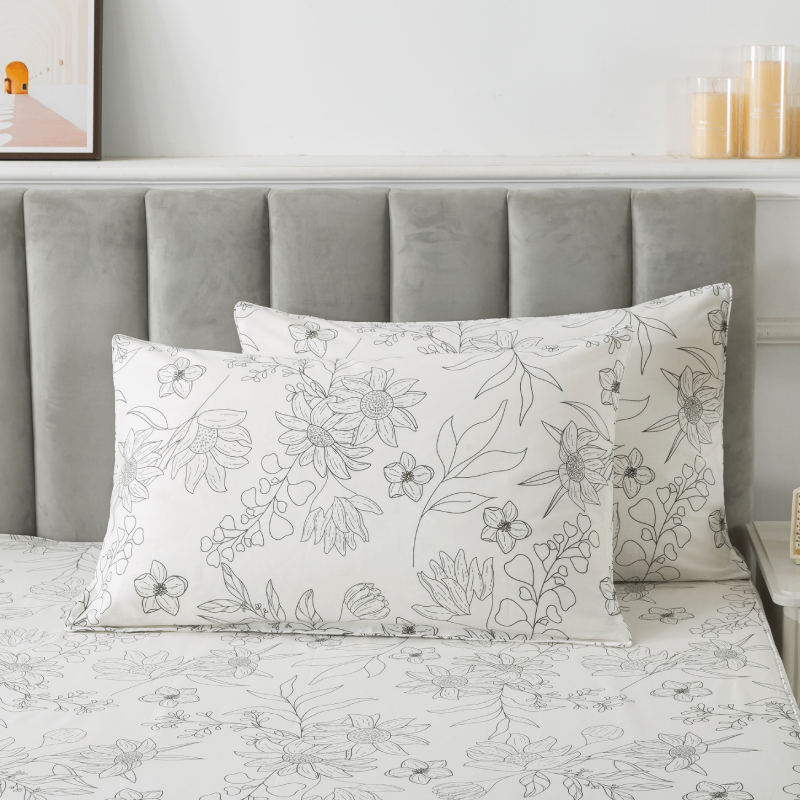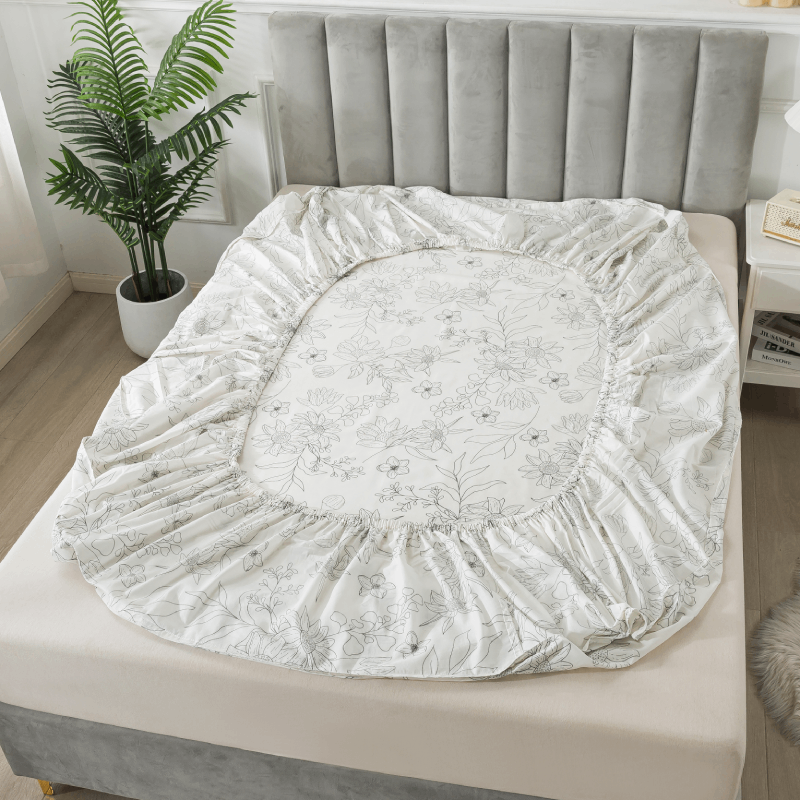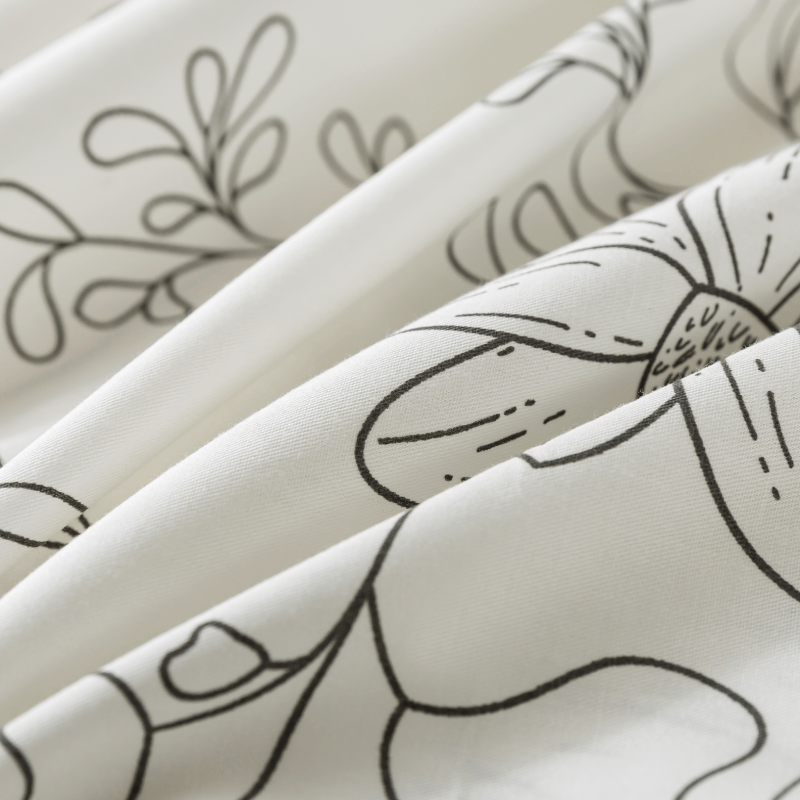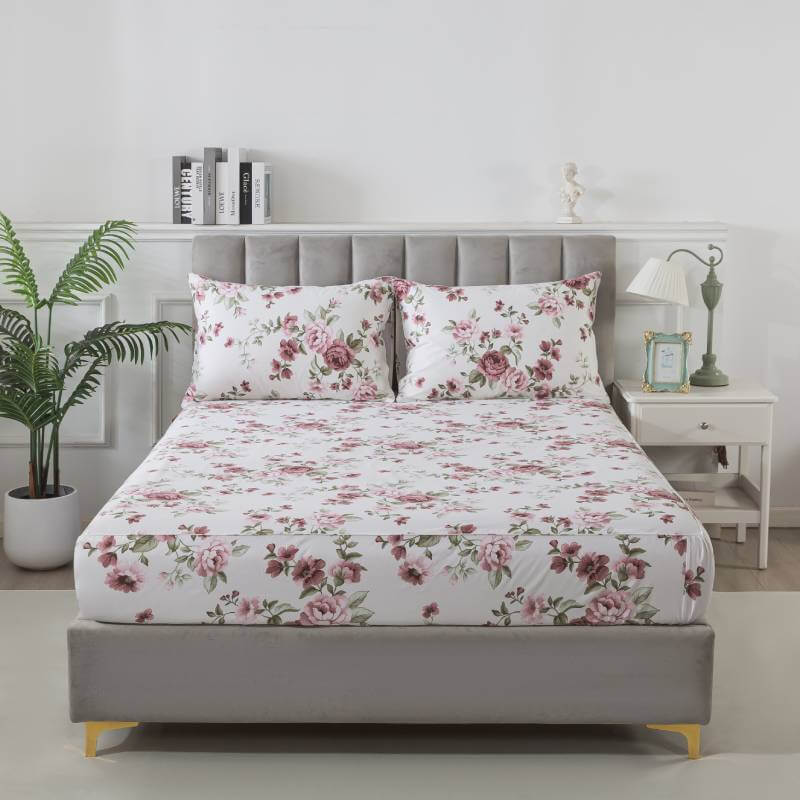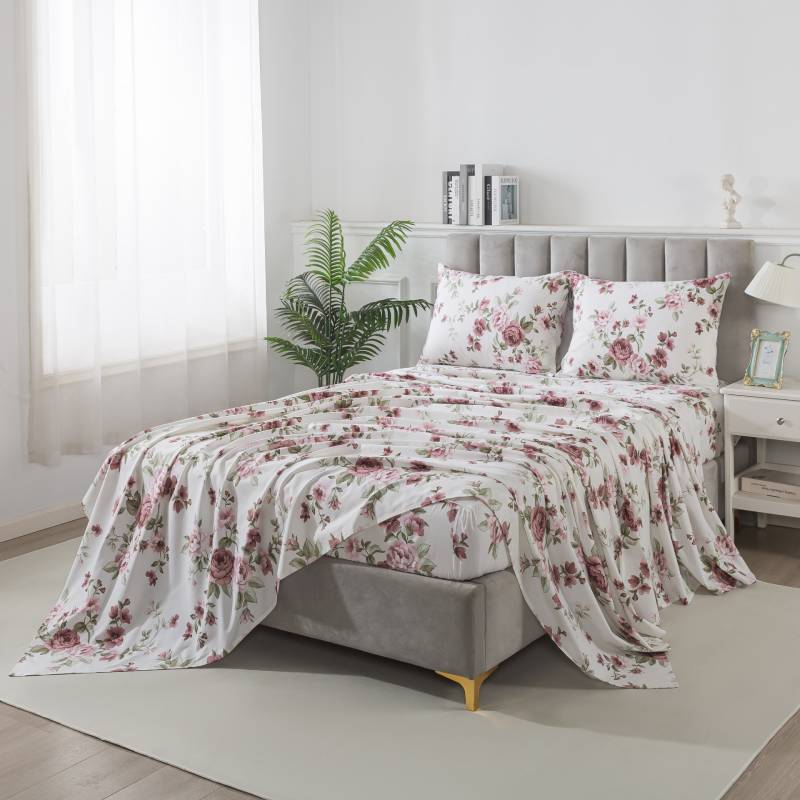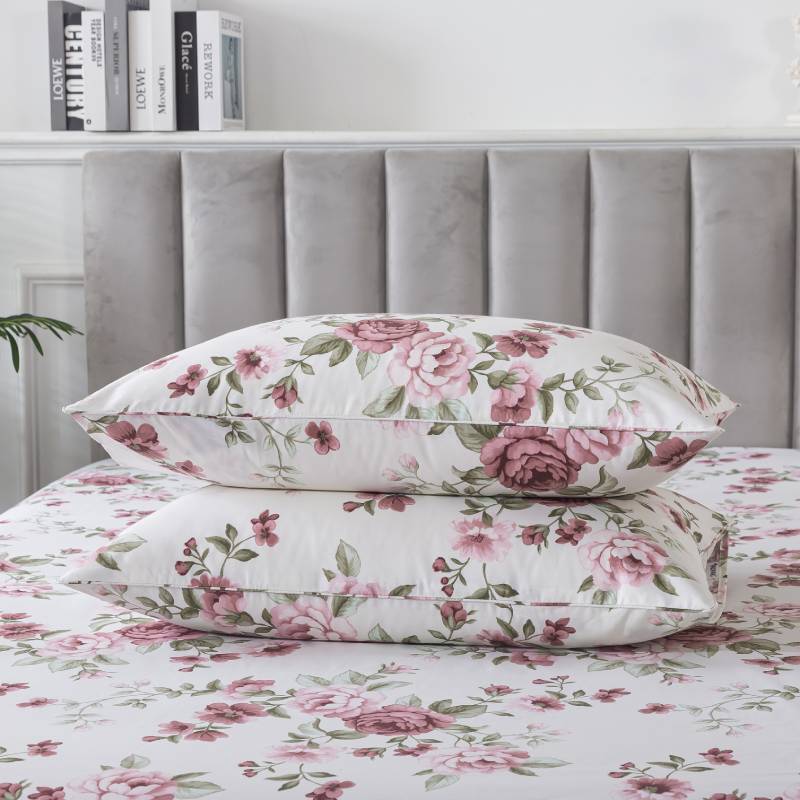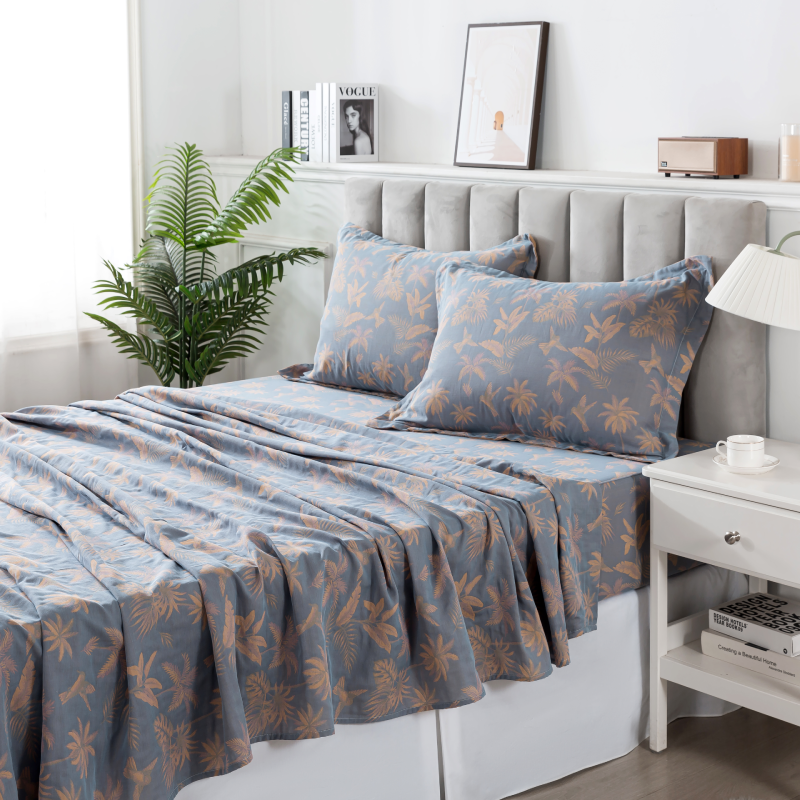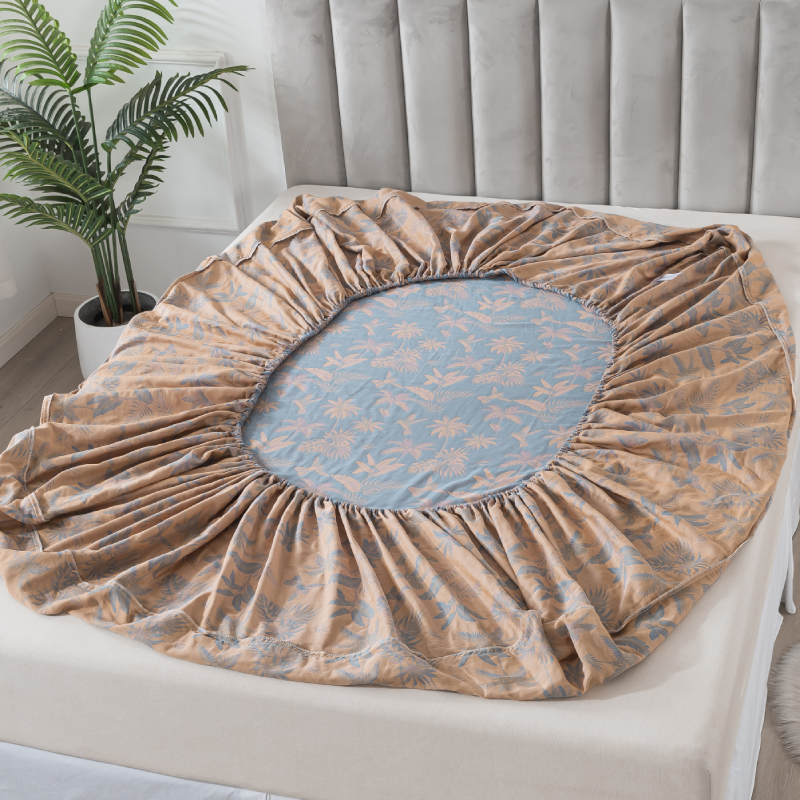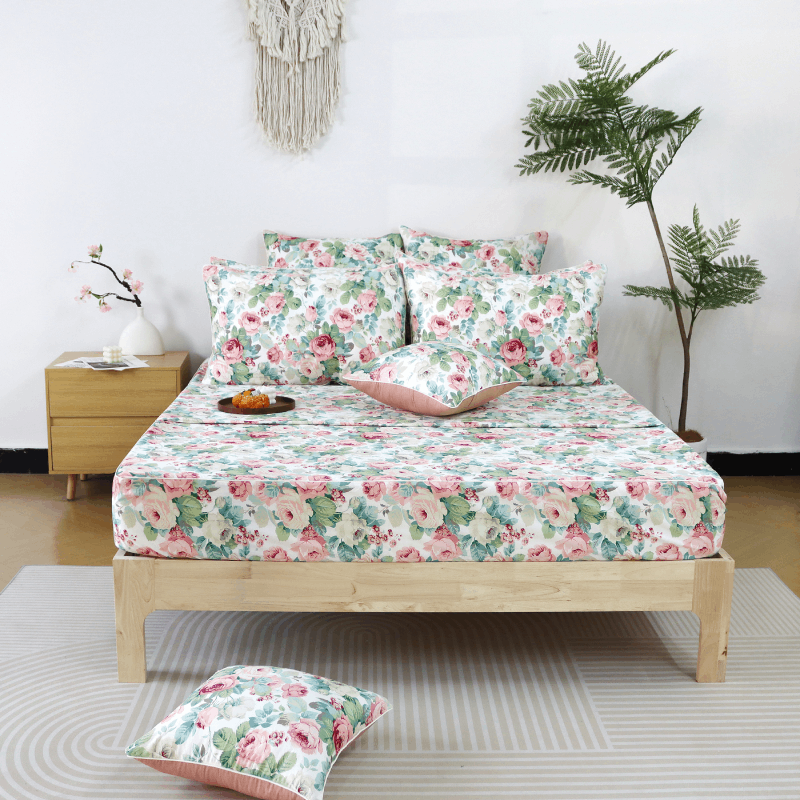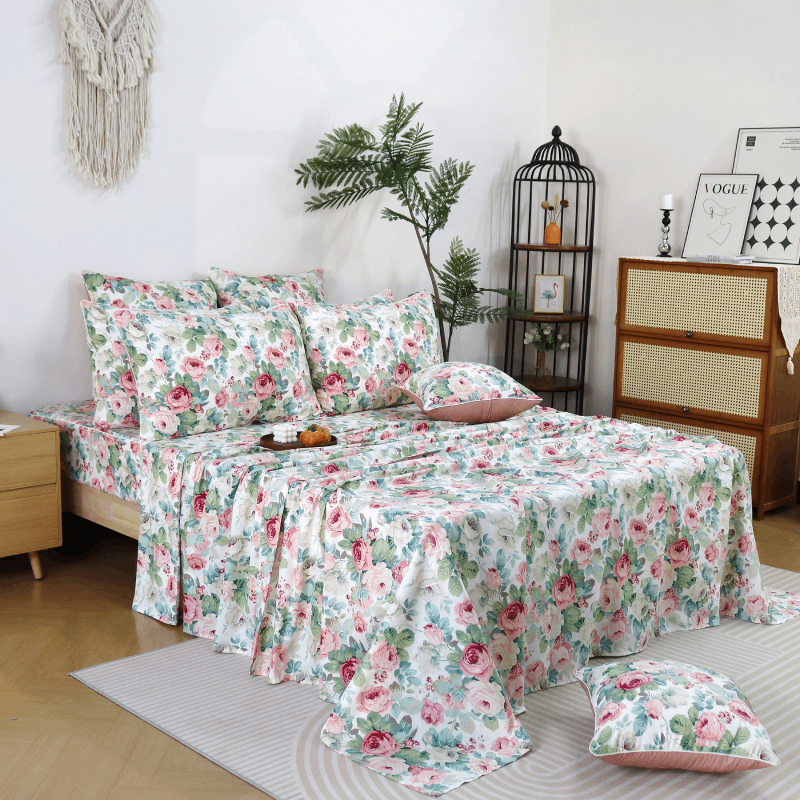


Floral bedding is never just about flowers. It is about proportion, rhythm, visual weight, and the emotional language created by repetition. In textile design, scale (the size of motifs) and spacing (the distance and density between them) are structural variables that define the personality of a bedding collection—whether it feels romantic, modern, playful, or serene.
For brands centered on cotton floral bedding, understanding these two elements is not just aesthetic preference; it is design strategy.
1. Large-Scale Florals: Bold and Expressive
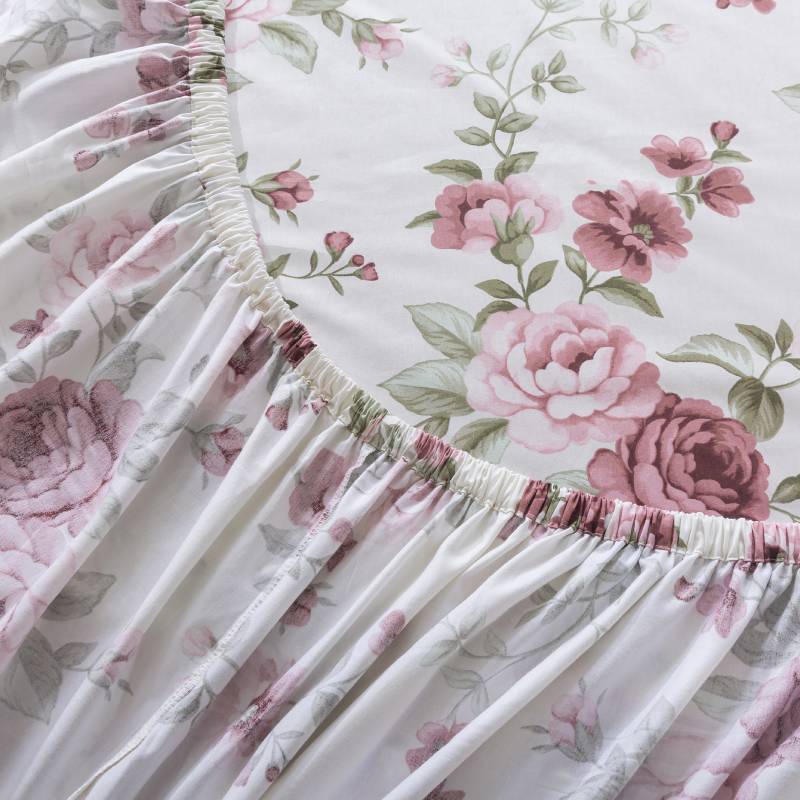
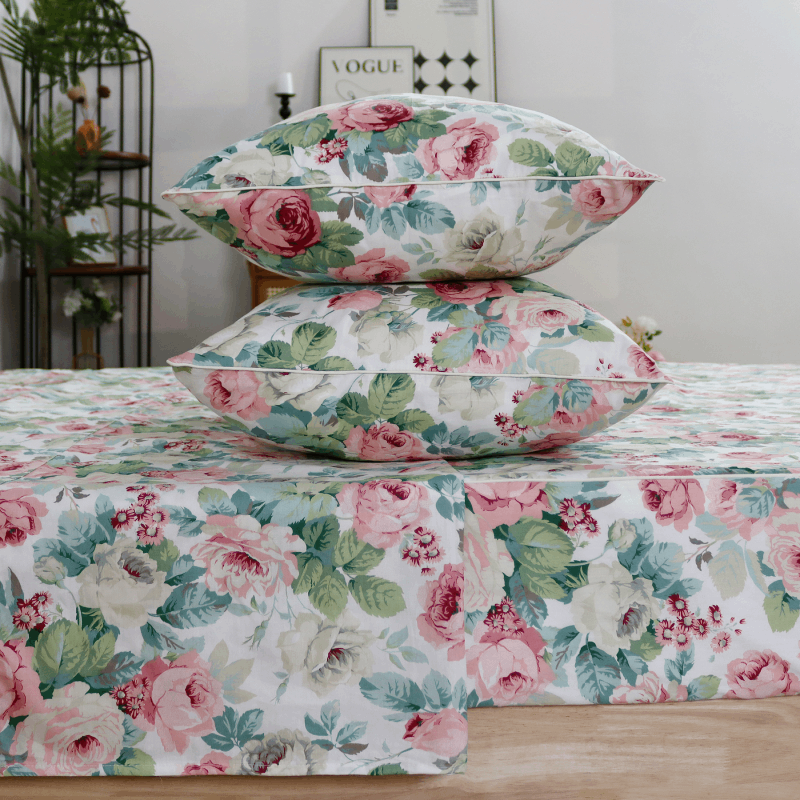
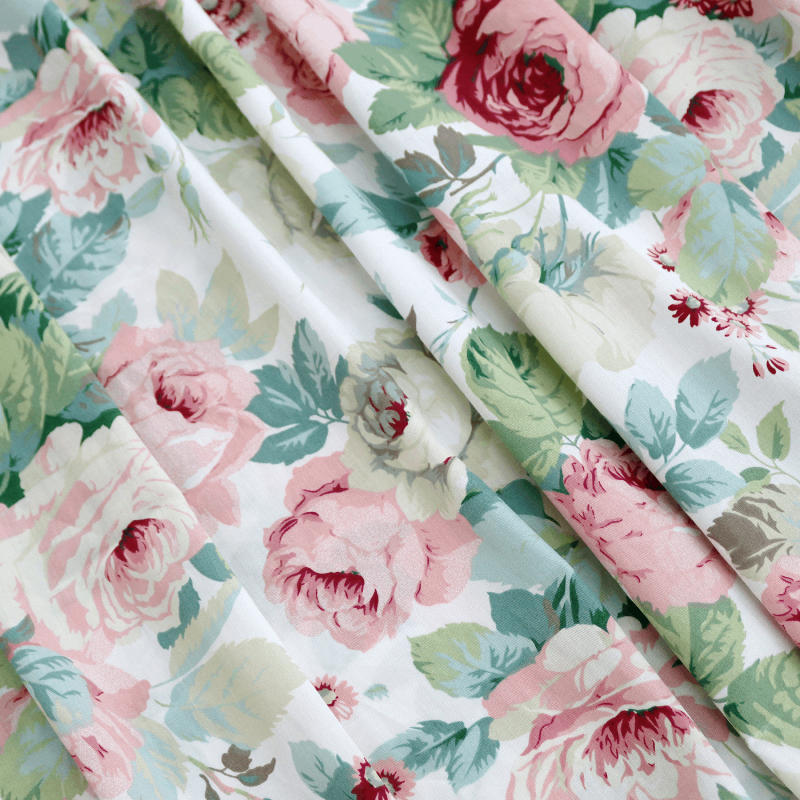
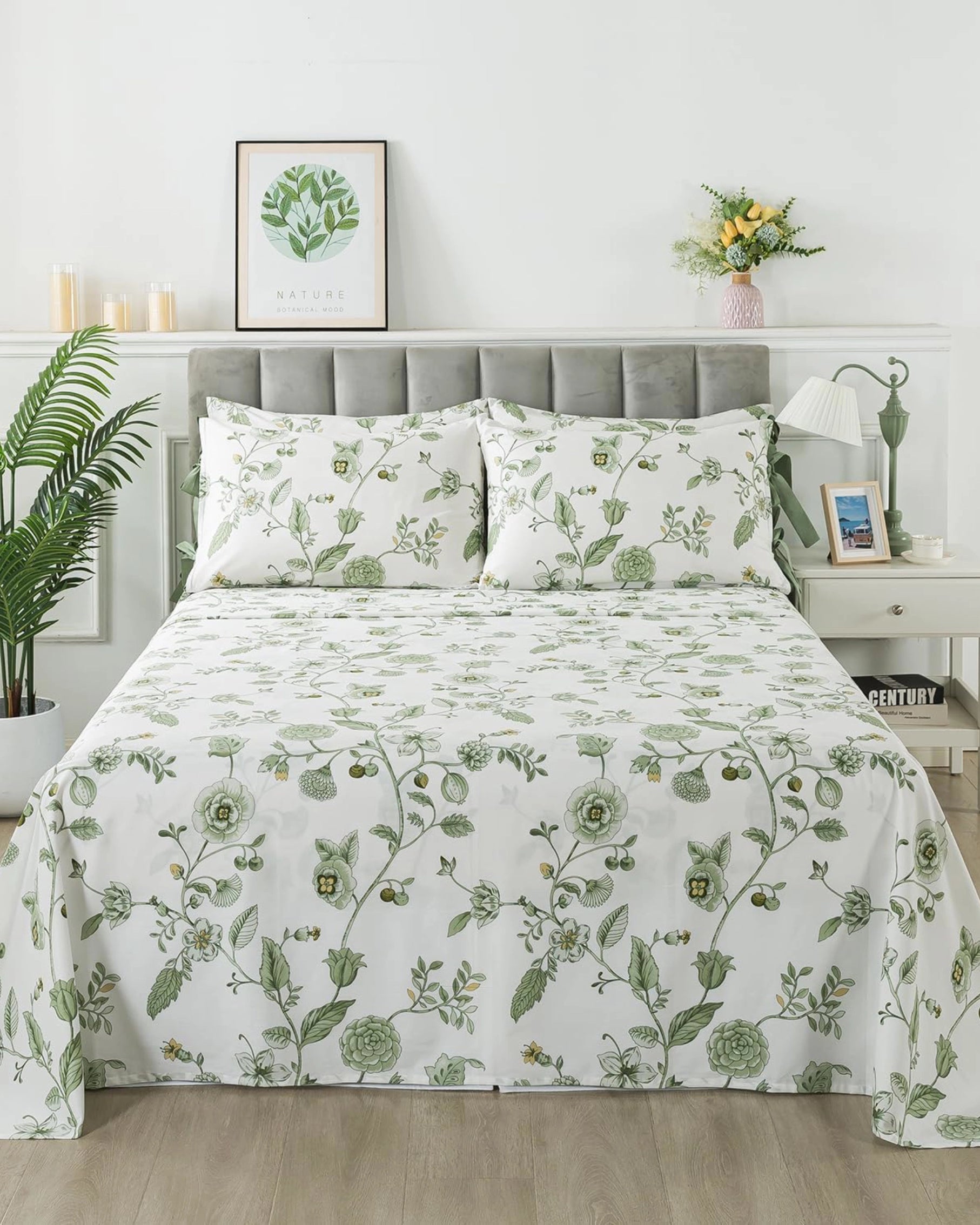
Large-scale florals create immediate visual impact. Oversized blooms reduce background negative space and increase surface dominance, resulting in:
-
Strong focal presence
-
Confident, statement-driven style
-
Elevated, mature atmosphere
From a compositional standpoint, larger motifs reduce visual fragmentation. The eye reads the pattern more holistically, which produces clarity and authority. In bedrooms with neutral walls or minimal décor, large florals anchor the space and transform the bed into the visual center.
However, scale must align with room size. In compact rooms, oversized patterns may overwhelm unless balanced with restrained styling.
2. Small-Scale Florals: Soft and Intimate
Small-scale florals—often referred to as ditsy prints—rely on repetition density rather than motif size to create character. Because the motifs are compact and frequent, they generate:
-
Visual delicacy
-
Emotional warmth
-
Nostalgic charm
Technically, tighter repetition creates a continuous rhythm that softens the visual field. This is why small florals often feel cozy and inviting. They work particularly well in cottage-inspired spaces, guest rooms, or children’s rooms where comfort and familiarity are key.
Smaller patterns also tend to make spaces feel lighter, as no single motif dominates the surface.

3. Wide Spacing: Airy and Contemporary
Spacing determines how much negative space surrounds each floral element. When florals are widely spaced:
-
The background becomes part of the design
-
The room feels breathable and open
-
The aesthetic shifts toward modern restraint
In design theory, negative space reduces visual noise and increases perceived calm. A floral print with generous spacing feels more refined and contemporary, especially when paired with soft, neutral palettes.
Wide spacing is ideal for customers who appreciate florals but prefer subtlety over ornamentation.
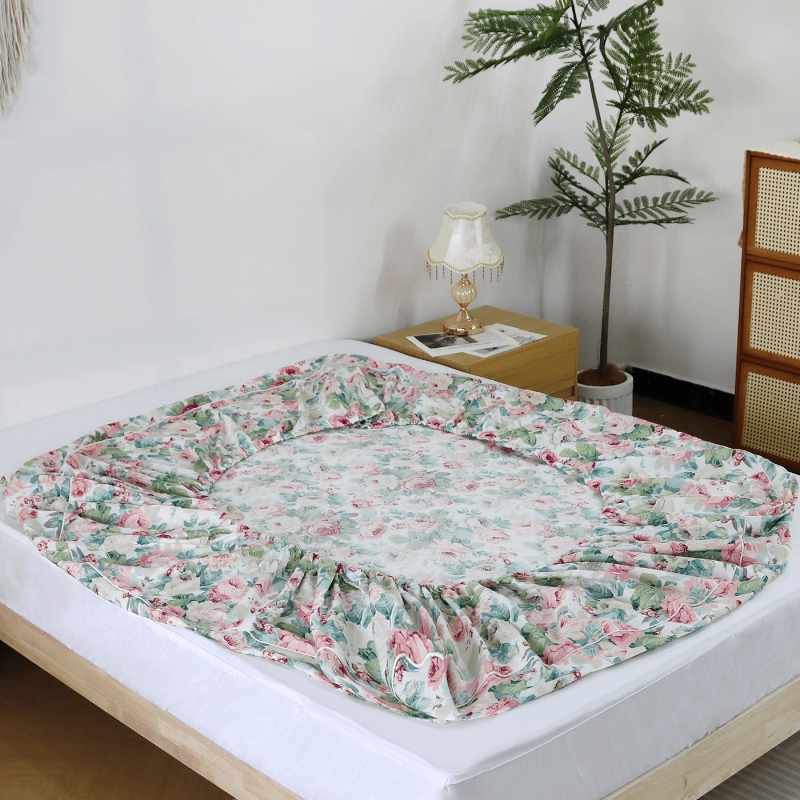
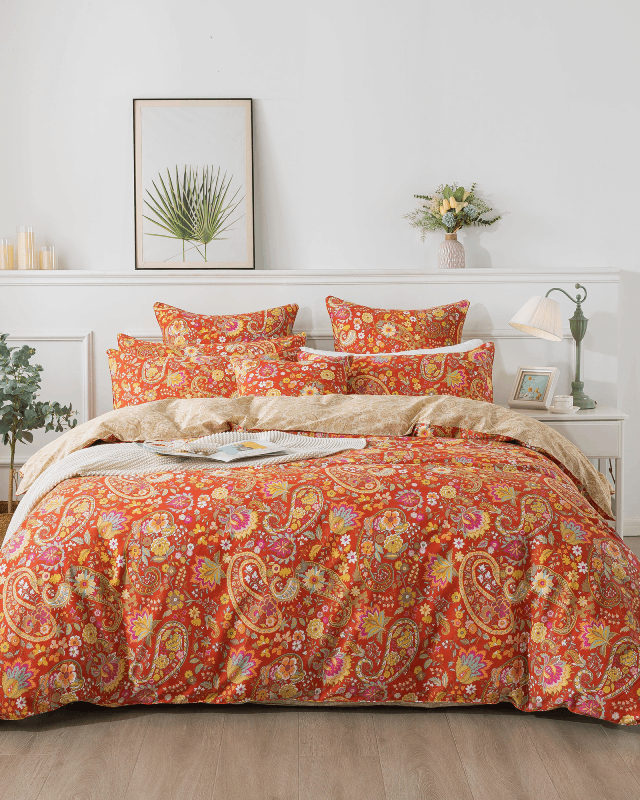
4. Dense Spacing: Romantic and Immersive
Dense spacing increases pattern saturation. When florals overlap or cluster closely:
-
The surface appears richly layered
-
The mood becomes immersive
-
The aesthetic leans romantic or vintage
Dense florals visually warm a space. They reduce blank areas and create intimacy, making them particularly appealing for traditional interiors or colder seasons.
That said, dense patterns require thoughtful styling. To prevent visual overload, pair them with solid sheets or minimal accessories.
5. The Interaction of Scale and Spacing
Scale and spacing rarely function independently. Their interaction defines personality more precisely:
-
Large + Wide Spacing → Modern botanical, balanced and sculptural
-
Large + Dense Spacing → Dramatic and heritage-inspired
-
Small + Wide Spacing → Soft contemporary, gentle and fresh
-
Small + Dense Spacing → Romantic cottage aesthetic
Understanding this matrix allows designers and buyers to move beyond “liking flowers” and instead select florals that align with spatial goals and emotional tone.
6. Fabric as a Multiplier of Personality
The impact of scale and spacing is amplified by fabric choice. In 100% cotton bedding:
-
Natural fibers enhance color depth
-
Breathability contributes to tactile comfort
-
Surface texture subtly affects pattern perception
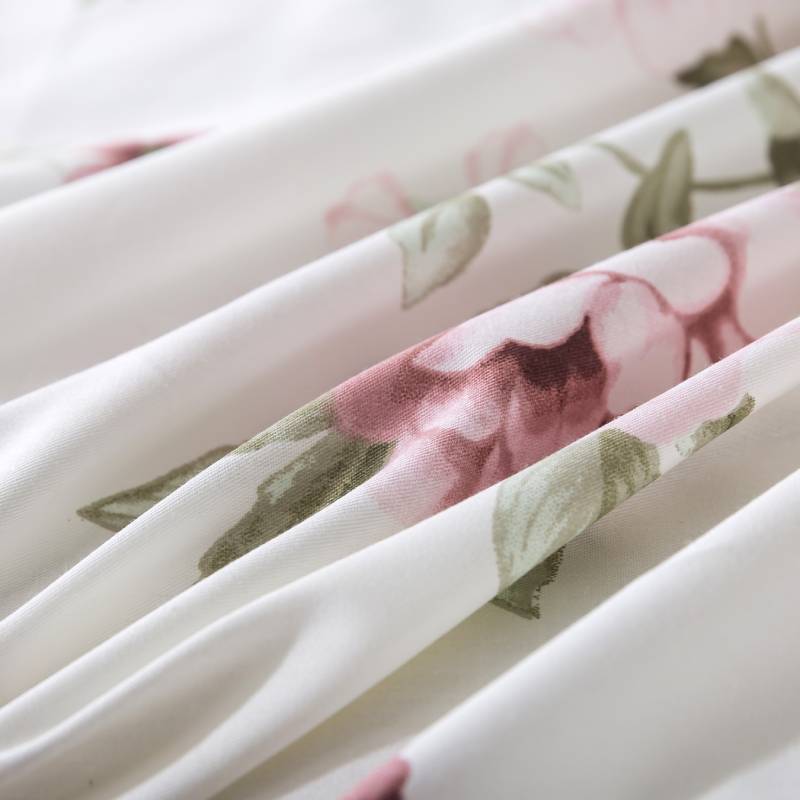
Crisp cotton weaves emphasize clarity and structure, reinforcing bold floral designs. Softer constructions diffuse edges slightly, enhancing romantic or nostalgic prints.
This interplay between print composition and material structure ultimately defines how the bedding feels—not just visually, but physically.
7. Choosing the Right Floral Personality
When selecting floral bedding, consider:
-
Should the bed be the focal point of the room?
-
Is the goal calm minimalism or expressive charm?
-
How large is the room relative to the print scale?
-
Will surrounding décor compete or complement the pattern?
Floral bedding communicates mood instantly. Before texture is touched, color and proportion already shape perception.
Conclusion
Floral bedding is a study in visual language. Scale determines authority. Spacing determines rhythm. Together, they define personality.
Whether bold and dramatic or delicate and nostalgic, the right combination transforms bedding from functional necessity into emotional centerpiece.
When thoughtfully designed—especially in breathable cotton—florals do more than decorate a bedroom. They shape how the space feels, how it rests, and how it lives.